



















Universal Electric Vehicle Battery Cartridge and Swap Ecosystem
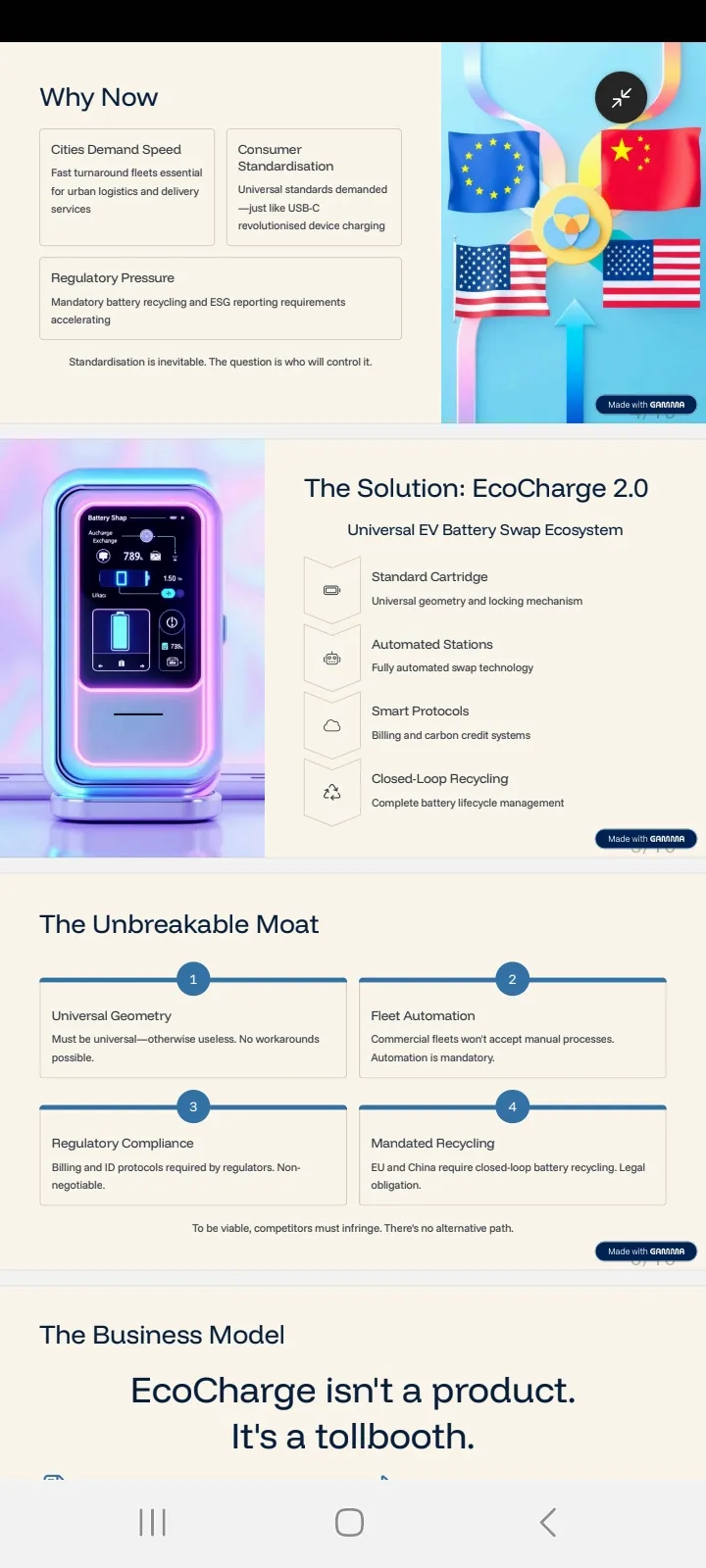
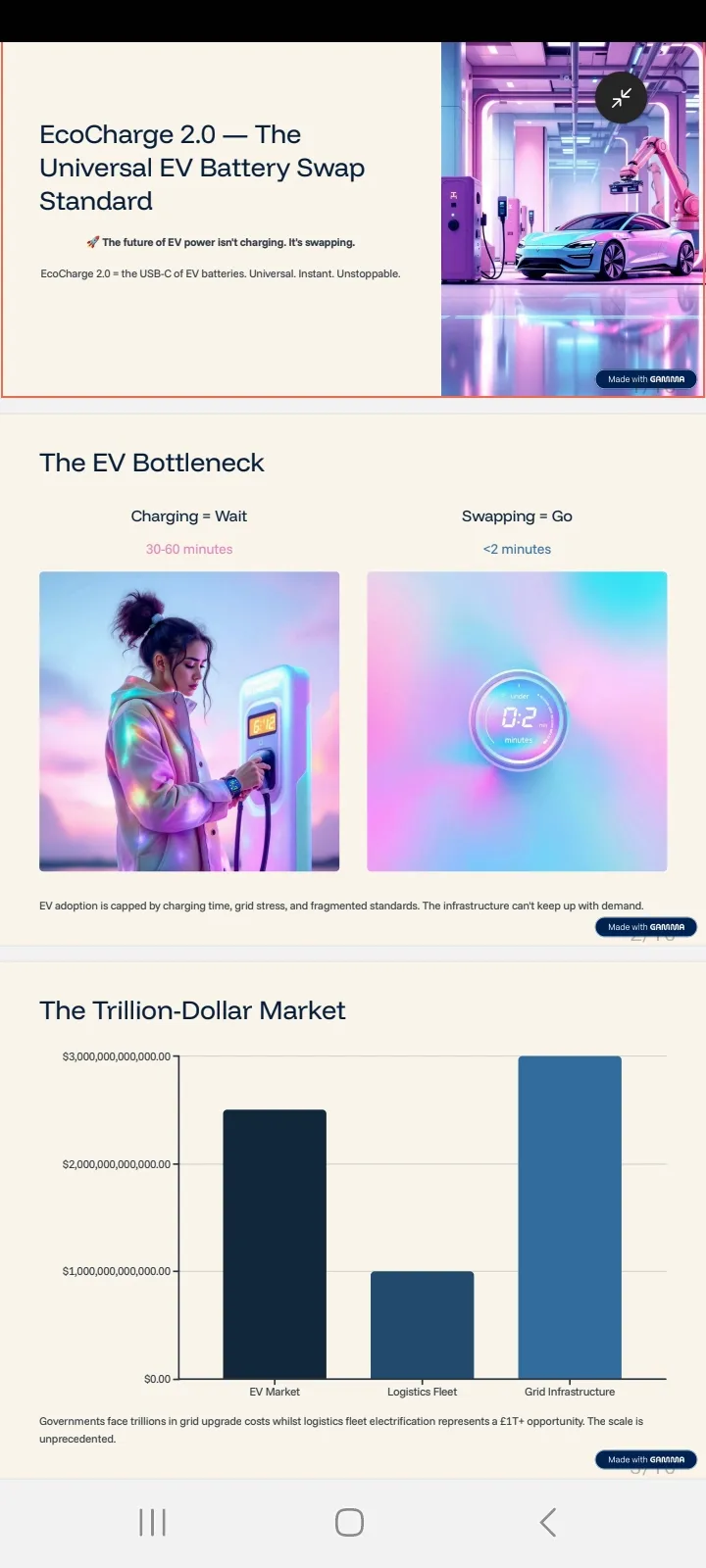
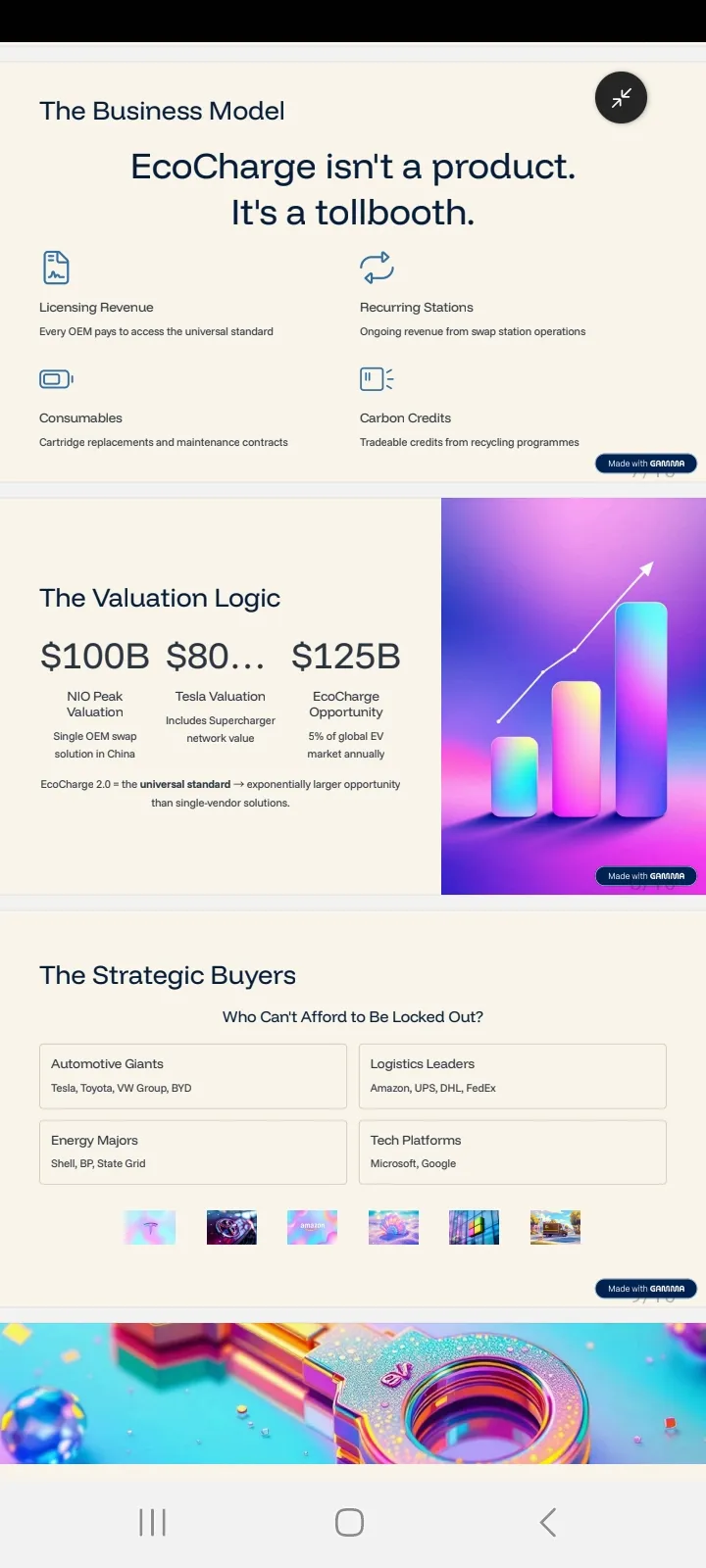
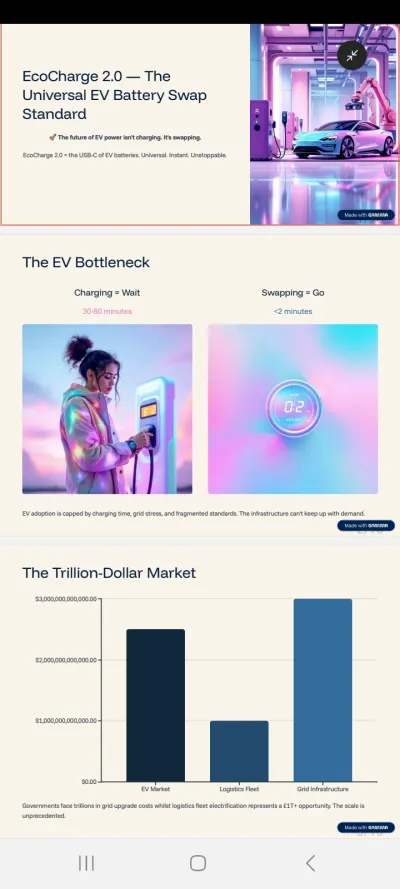
This invention is a "universal" battery system for electric vehicles (EVs) that works like AA batteries do for household electronics. Instead of plugging in your car and waiting hours for it to charge, you simply pull into an automated station where a robotic arm swaps your empty battery "cartridge" for a fresh one in minutes. These cartridges are designed with a standard shape and size so they can fit into many different types of vehicles—from scooters and cars to delivery vans—regardless of the brand. The system also includes a smart billing network that tracks your usage and a recycling program that ensures old batteries are safely broken down and reused to make new ones.
Currently, owning an EV can be frustrating because of three main issues:
"Range Anxiety" and Long Waits: Charging a car takes much longer than filling a tank of gas, and there aren't always enough fast chargers available.
Lack of Standards:
Different car companies use different battery designs. A battery from one brand won't work in another, which makes it hard to build a single, massive network of charging or swapping stations that everyone can use.
Waste and Costs:
When batteries die, they are often difficult to recycle efficiently, and the high cost of the battery itself makes EVs more expensive for the average person.
The invention solves these problems by creating a Standardised Ecosystem consisting of four parts:
Universal Cartridges: Every battery has the same "plug-and-play" shape, safety locks, and connectors, making them compatible across various vehicle classes.
Smart Vehicle Slots: Cars are built with a special "blind-insertion" slot that automatically aligns the battery and locks it into place safely.
Automated Swap Stations: These stations act like vending machines for power; they store, charge, and balance batteries using renewable energy (like solar) and swap them into cars automatically.
Cloud-Based Tracking: A digital system handles the payment, verifies the battery’s health, and even tracks the "carbon footprint" of every swap to keep the system sustainable.
Yes. The major gap in "prior art" (existing technology) is interoperability. Most current battery-swapping systems are "proprietary," meaning they only work for one specific brand of car (like Tesla or NIO). This fragmentation prevents a global infrastructure from growing because a station owner would have to stock dozens of different battery types.This invention fills that gap by establishing a cross-brand standard. It moves away from "one-size-fits-one" and creates a "one-size-fits-all" architecture for the battery, the vehicle interface, and the billing protocol. This allows different manufacturers to share the same infrastructure, significantly lowering costs and making EV adoption as easy and fast as visiting a traditional petrol station.
Universal Geometry & Polarity: Unlike existing systems, this uses a fixed standard for dimensions and connectors that allows the same cartridge to work across cars, vans, trucks, and scooters.
Blind-Insertion Interface: Self-aligning mechanical guides allow the battery to be inserted and locked perfectly without human precision or visibility.
ESG & Carbon Tracking: The billing protocol doesn't just process payments; it logs the carbon footprint and sustainability data for every swap.
Closed-Loop Recycling: The system is designed from the start to be disassembled, recovering metals and polymers to be reintegrated into new cartridges.
Industries where the invention can be useful?
Automotive: Personal EVs and public transport.Logistics & Last-Mile Delivery: Fleet operators for vans and trucks who cannot afford long charging downtimes.Micro-mobility: Electric scooter and bike-sharing services.Renewable Energy Storage: Using swap stations as "grid balancers" to store excess solar/wind power.An estimate of the total addressable market?
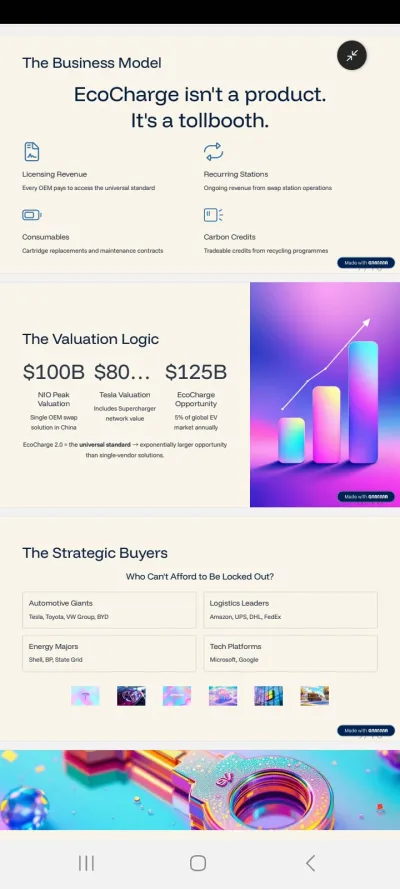
The global Electric Vehicle Market was valued at approximately $388 billion in 2023 and is projected to grow significantly. Specifically, the EV Battery Swapping Market is a rapidly growing niche, estimated to reach over $4 billion by 2030, driven by the need for faster turnaround in commercial fleets.Potential Customers/End Users. Who might benefit?
Automotive OEMs: Manufacturers who want to outsource battery infrastructure.Fleet Managers: Delivery companies (like Amazon or DHL) looking to eliminate charging wait times.Energy Companies: Providers looking to install "gas stations of the future."Government/Municipalities: For public transit and urban sustainability initiatives.Documents
-
1778515657320_403.pdf
Actions
Added all portfolio
| Country | Current Status | Patent Application Number | Patent Number | Applicant / Current Assignee Name | Title | Google Patent Link |
| UK | Pending | GB2515402.2 | Not mentioned | Zakaria Mohamud | Universal Electric Vehicle Battery Cartridge and Swap Ecosystem | Not mentioned |
You may also like the following patent
Battery Power Management Apparatus and Method
| Available For: India | Automotive and Transportation |
This invention is a smart battery management system that helps ensure vehicles and other devices always have sufficient power. It works by dividing the electrical system into two parts: one powered...
| Application Number | 202414057130 |
| Patent Number | N/A |
| Current Status | Continue |
BATTERY POWER MANAGEMENT APPARATUS AND METHOD FOR ELECTRIC VEHICLES AND/OR HYBRID VEHICLES,
| Available For: India | Automotive and Transportation |
Overview:This invention provides an advanced battery power management system specifically designed for electric and hybrid vehicles. It efficiently monitors battery levels and manages various...
| Application Number | 202414063134 |
| Patent Number | N/A |
| Current Status | Continue |
Battery Power Management Apparatus and Method for Electric Vehicles and/or Hybrid Vehicles.
| Available For: India | Automotive and Transportation |
The invention is a system that helps electric and hybrid vehicles monitor, maintain, and recharge their batteries. It uses different recharging methods (like plug-in charging and wireless charging)...
| Application Number | 202317052469 |
| Patent Number | N/A |
| Current Status | Continue |
Novel separator material for Solid-State Battery
| Available For: Taiwan | Automotive and Transportation |
This invention introduces a novel separator for solid-state batteries made from recycled PET (rPET) modified with waste oyster shell powder. This composite material offers high mechanical strength...
| Application Number | M675224 |
| Patent Number | TWM675224U |
| Current Status | Issued |