



















Contact herbicide for the control of horseweed (Conyza spp.) and other weeds
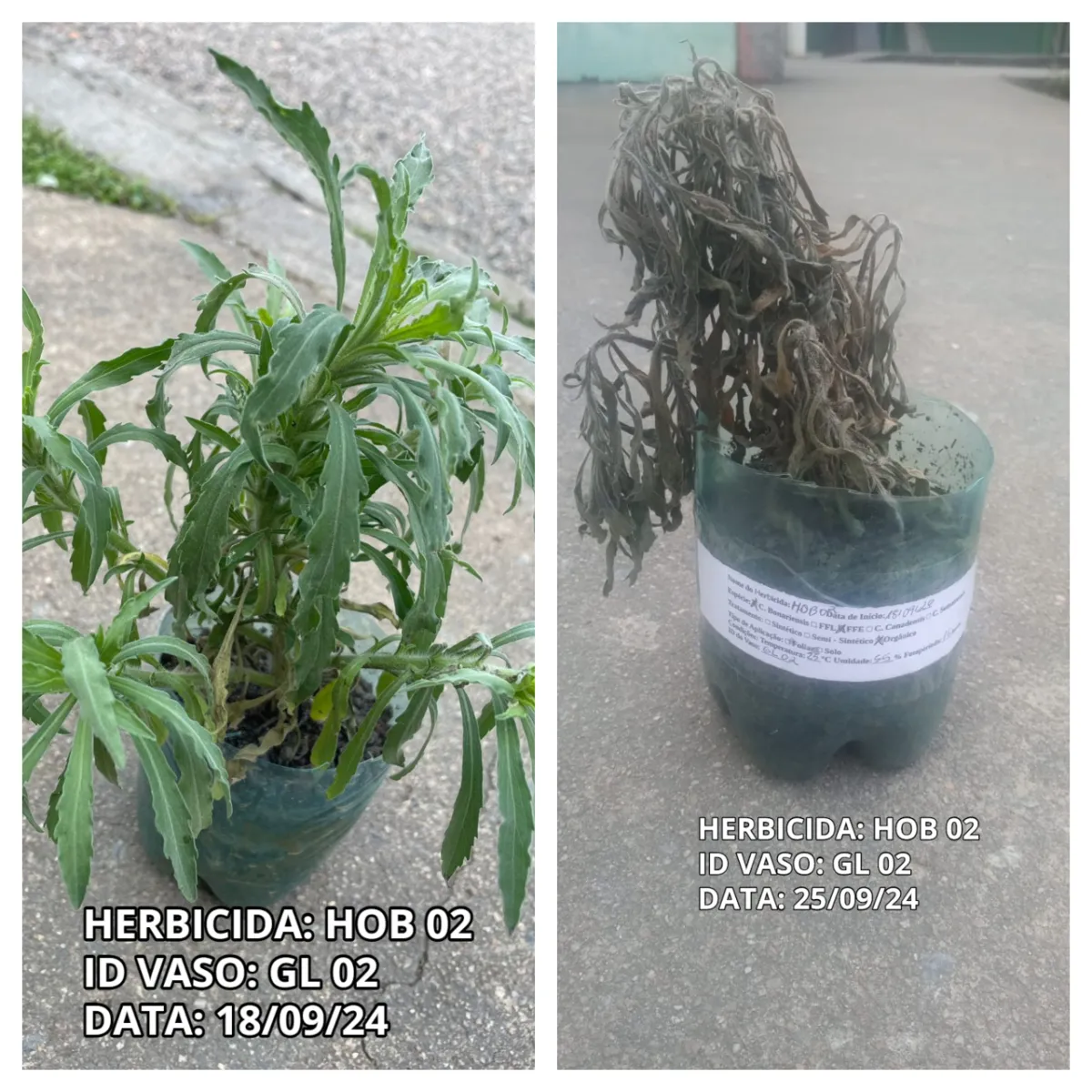
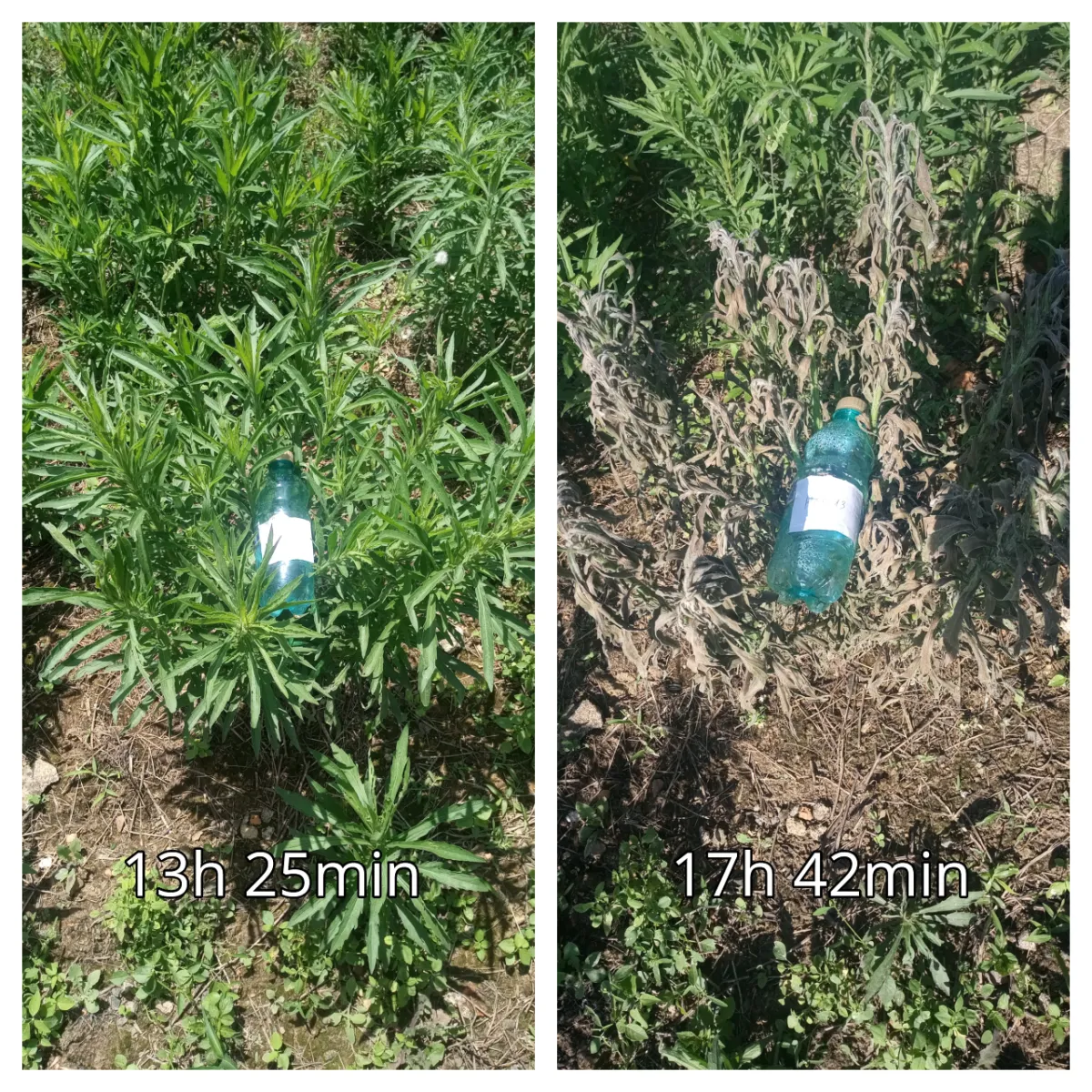
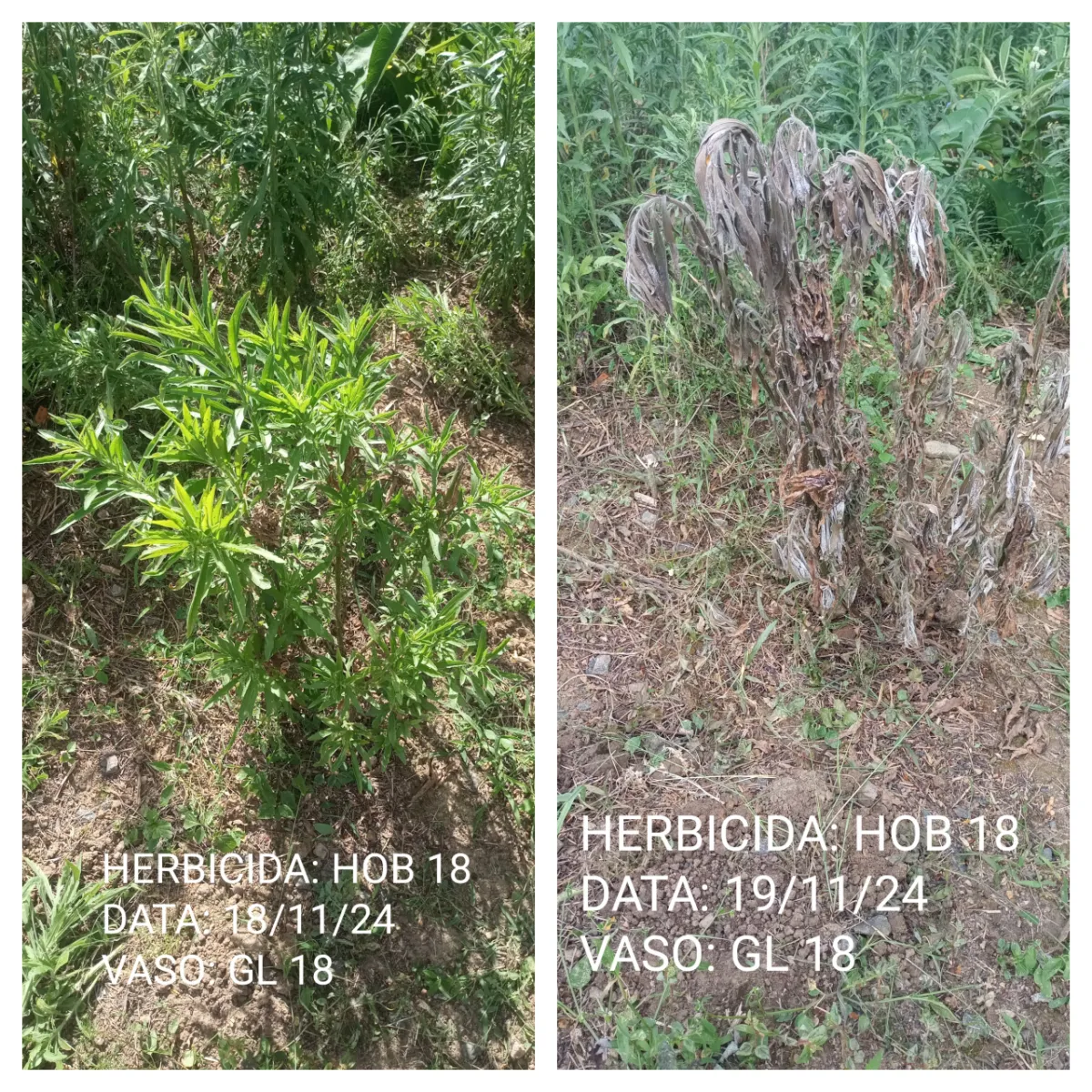
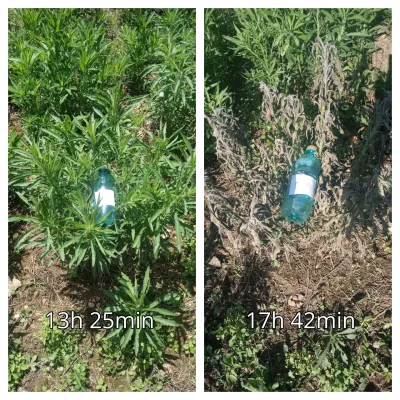
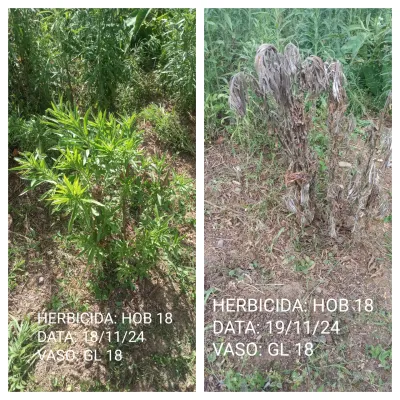
This invention is a new type of weed-killer (herbicide) designed to dry out and kill unwanted plants such as horseweed (Conyza spp.) and other difficult weeds. It is a contact herbicide, which means it works on the parts of the plant it touches, especially the leaves, causing them to dry and die in a short time.
The product is made from common, low-cost ingredients, including acetic acid (similar to the main component of vinegar), ammonium sulfate, a biodegradable cleaning-type agent, and vegetable oil. These ingredients work together to spread well over the leaf, stick to it, and quickly damage the plant tissue. Because the components are widely available and have a simpler environmental profile than many traditional chemical herbicides, the invention can help reduce costs and environmental impact.
This herbicide can be used in many situations, such as on farms, along roads, in industrial areas or in urban spaces where weeds cause problems. The invention offers farmers, companies and public authorities a practical, affordable and more sustainable option for weed control.
The Invention, Namely the Solution to the Problem
The present invention provides a contact herbicide composition specifically designed to control Conyza spp. (horseweed) and other hard-to-manage weed species that have shown reduced sensitivity or resistance to conventional herbicides. The solution lies in a synergistic formulation based on acetic acid, ammonium sulfate, a biodegradable surfactant and vegetable oil, which together deliver rapid foliar desiccation, high efficacy and lower cost when compared to many existing commercial alternatives.
Acetic acid acts as the primary desiccating agent, quickly damaging the cuticle and cell structures of the leaf tissue upon contact. Ammonium sulfate enhances the performance of the formulation by improving ion balance and facilitating penetration into the leaf surface. The biodegradable surfactant reduces surface tension, ensuring uniform spreading and wetting of the leaf, even on waxy or erect foliage typical of Conyza spp.. The vegetable oil component improves adhesion, increases residence time on the leaf and further promotes penetration of the active constituents.
By combining these widely available and relatively low-cost components in a specific contact herbicide system, the invention offers an effective alternative to systemic herbicides, particularly in situations where resistance has reduced their usefulness. The formulation can be applied in agricultural fields, along roadways, in industrial areas and in non-crop environments, providing a flexible tool for weed management. Thus, the invention solves the technical problem of controlling difficult and resistant weeds while addressing economic constraints and aiming at a reduced environmental impact profile compared to many conventional synthetic herbicides.
The invention consists of a contact herbicide composition specifically formulated to control horseweed (Conyza spp.) and other difficult weeds that are poorly controlled or resistant to conventional herbicides. Instead of relying on complex synthetic active ingredients, the solution combines acetic acid, ammonium sulfate, a biodegradable surfactant and vegetable oil in defined proportions. This combination provides rapid foliar desiccation, good coverage of the leaf surface and improved penetration, resulting in efficient weed control at relatively low cost.
Acetic acid acts as the main desiccating agent, damaging the leaf tissues upon contact. Ammonium sulfate enhances the action of the formulation and contributes to the breakdown of the plant’s protective barriers. The biodegradable surfactant reduces surface tension, allowing the spray to spread evenly over the leaf, while the vegetable oil improves adhesion and prolongs contact time, increasing effectiveness. Together, these components offer a practical alternative for weed management in agricultural and non-agricultural areas, addressing the technical problem of controlling hard-to-manage weeds while considering economic feasibility and a more favorable environmental profile compared to many traditional herbicides.
Yes. The invention addresses a significant gap in the prior art related to the control of Conyza spp. and other hard-to-manage weeds that have developed resistance or reduced sensitivity to widely used systemic herbicides (for example, glyphosate and other modes of action). Existing solutions often rely on complex synthetic active ingredients, higher costs and repeated applications, while still failing to provide reliable control in many field situations.
There is also a lack of simple, contact-acting herbicide formulations that combine low-cost, widely available ingredients with a more favorable environmental profile. The proposed composition—based on acetic acid, ammonium sulfate, a biodegradable surfactant and vegetable oil—fills this gap by offering: (i) rapid foliar desiccation of resistant weeds, (ii) relatively low production cost, and (iii) potential for reduced environmental impact compared to many conventional herbicides. Thus, the invention provides a practical, scalable and more sustainable alternative where current products are either ineffective, too expensive, or environmentally burdensome.
Unique Features of Product/Process/Service
The product is a contact herbicide with a distinctive combination of acetic acid, ammonium sulfate, biodegradable surfactant and vegetable oil, providing rapid foliar desiccation and effective control of Conyza spp. and other hard-to-manage weeds. Unlike many conventional herbicides that depend on complex synthetic molecules and systemic action, this invention uses widely available, low-cost ingredients in a synergistic formulation that acts mainly on the plant surface, reducing the risk of resistance development.
Another unique feature is the balance between efficacy, cost and environmental profile**. The formulation is designed to deliver quick visual results, while aiming at a simpler and potentially more favorable environmental footprint than many traditional weed-killers. In addition, the product can be applied in multiple contexts (agricultural fields, roadsides, industrial areas and urban environments), offering users a versatile solution that can be adapted to different weed management strategies and regulations.
Industries where the invention can be useful?
Agriculture and Agribusiness Grain crops (e.g. soybean, corn, wheat) Fruit and vegetable production Pre-plant and pre-harvest weed management Public Sector and Municipal Services Weed control along streets, sidewalks and public squares Maintenance of parks, green areas and sports facilities Control of vegetation around public buildings and schools Infrastructure, Transport and Utilities Roadside, highway and railway vegetation management Airports and port areas Power lines, pipelines and utility corridors Industrial and Commercial Areas Weed control in factory yards and warehouses Logistics centers, parking lots and fuel stations Large commercial complexes and shopping centers Landscaping, Gardening and Property Management Professional landscaping companies Condominium and golf course maintenance Garden centers and specialized service providers Specialty and Niche Markets Producers seeking more sustainable weed management solutions Service providers focused on “green” or low-impact practices Across these sectors, the invention can generate value by offering a practical, cost-conscious and more sustainable weed control option, creating opportunities for licensing, co-development or direct commercialization.An estimate of the total addressable market?
The invention targets the global herbicide and weed-control market, which is a multi-billion-dollar segment within the crop protection industry. Recent market reports indicate that: The global herbicide market moves tens of billions of US dollars por ano, with steady growth driven by expanding agricultural production, weed resistance to existing products and demand for more sustainable solutions. Within this market, there is a significant and growing share for non-selective and contact herbicides, as well as for products perceived as having a lower environmental impact, used tanto em áreas agrícolas quanto não agrícolas (áreas urbanas, industriais, infraestruturas, rodovias, etc.). Considering: the large planted area of crops severely affected by Conyza spp. (especially soybean and other row crops), the continuous need for vegetation control in roads, railways, energy corridors, industrial yards and urban/public areas, and the increasing interest in cost-effective and more sustainable weed-management solutions, the total addressable market for this invention can be positioned as a relevant fraction of the global herbicide/weed-control market, with potential applications in agriculture, public sector services, infrastructure maintenance, industrial sites, landscaping and property management. In other words, the invention is not restricted to a small niche, but can serve multiple high-volume segments where unwanted vegetation control is essential, offering room for wide geographic and sectoral expansion through licensing or commercialization partnerships.Potential Customers/End Users. Who might benefit?
This invention can benefit a wide range of customers and end users who need practical and affordable weed control. Potential users include: 1. Farmers and agricultural producers * Small, medium and large-scale growers of soybean, corn, wheat, fruits and vegetables * Producers looking for additional tools to manage resistant or hard-to-control weeds 2. Agribusiness companies and cooperatives * Input distributors and cooperatives that support farmers with technical solutions * Companies interested in offering differentiated or more sustainable weed-control products 3. Public authorities and municipal services * City councils and public works departments responsible for streets, sidewalks, parks and public areas * State or national agencies that manage roadways, railways and public infrastructure 4. Infrastructure and utility companies * Highway, railway, airport and port operators * Energy, water and gas companies that maintain corridors, substations and rights-of-way 5. Industrial and commercial property managers * Factories, warehouses, logistics centers and distribution hubs * Shopping centers, large parking areas and fuel stations 6. Landscaping and gardening service providers * Professional landscapers, garden maintenance companies and condominium managers * Golf courses, recreational areas and private parks All these users can benefit from a contact herbicide that focuses on effective weed desiccation, uses widely available ingredients and seeks to balance performance, cost and environmental considerations.Documents
-
1764564619295_759.pdf
Actions
Added all portfolio
| Country | Current Status | Patent Application Number | Patent Number | Applicant / Current Assignee Name | Title | Google Patent Link |
| BRAZIL | Green Patent Application | BR 10 2025 011191-8 A2 | Not mentioned | Marcos Eschiavon | Contact herbicide for controlling Conyza spp. and other weeds | Google patent link |
You may also like the following patent
Integrated Production Equipment For Solvent-Free Recycling Of Bio-fiber From Agricultural Straw
| Available For: Taiwan | Food and Agriculture |
This method enables efficient, solvent-free processing of agricultural straw, achieving a fiber extraction rate of over 85%.This is a "green factory" device that can directly convert waste...
| Application Number | M671486 |
| Patent Number | M671486 |
| Current Status | Issued |