



















Temperature differential engine
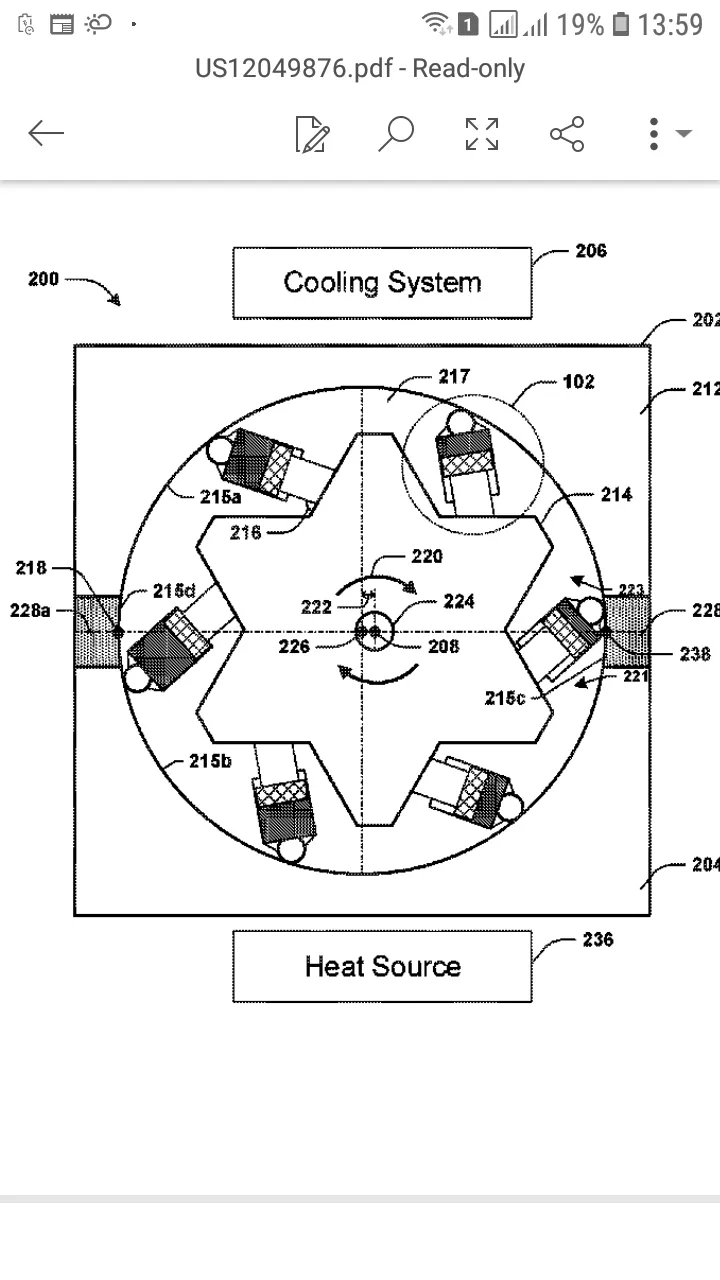
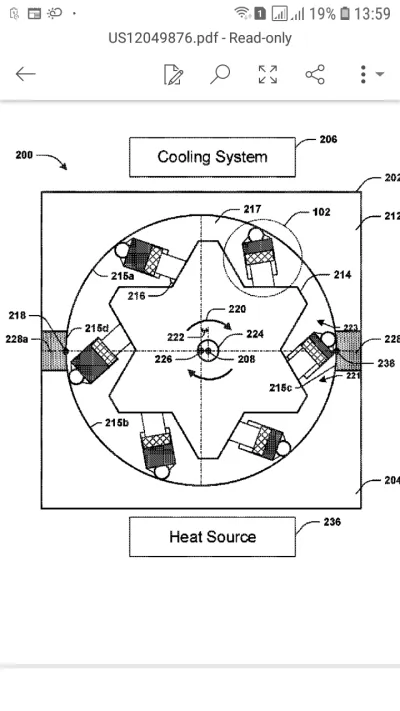
The Fotuhi Low‑Temperature Heat Engine is a patented energy conversion technology designed to generate mechanical and electrical power from low‑grade heat sources that are typically wasted.
The system operates efficiently with heat sources in the range of approximately 60°C to 120°C and does not require combustion, fossil fuels, or high‑pressure steam. It works as a closed‑cycle system and can be integrated into industrial processes, waste‑heat streams, or low‑temperature renewable heat sources.
Compared to conventional solutions that are ineffective at low temperature differences, this invention enables practical energy recovery, improved efficiency, and reduced operating costs. The technology is suitable for modular and distributed power generation, especially for industrial facilities and small to medium‑scale energy users.
The invention is protected by a granted United States patent (US12049876B2) and is available for licensing.
A large amount of thermal energy generated in industrial processes, power plants, and renewable heat sources is wasted because its temperature is too low to be efficiently converted into useful power by conventional technologies.
Most existing heat engines and power generation systems require high temperatures, high pressures, or complex working fluids to operate efficiently. As a result, low‑grade heat in the range of approximately 60°C to 120°C—such as industrial waste heat, low‑temperature solar thermal energy, geothermal fluids, or warm process water—is typically released into the environment without recovery.
Conventional solutions like steam turbines or Organic Rankine Cycle (ORC) systems become inefficient, costly, or technically impractical at these low temperature differentials. They often involve high system complexity, significant parasitic losses, safety concerns related to pressure and working fluids, and high capital and maintenance costs. This limits their adoption, especially for small and medium‑scale industrial users or distributed energy applications.
The inability to effectively utilize low‑temperature heat results in lost energy, higher operating costs, increased fuel consumption, and unnecessary greenhouse gas emissions. There is therefore a clear need for a simple, safe, and cost‑effective technology capable of converting low‑grade heat into useful mechanical or electrical power without requiring combustion, high pressure, or complex infrastructure.
The Fotuhi Low‑Temperature Heat Engine provides a practical solution for converting low‑grade heat into useful mechanical and electrical power.
The invention is a closed‑cycle heat engine specifically designed to operate efficiently with small temperature differences, typically between about 60°C and 120°C. Instead of relying on high‑pressure steam or combustion, the system uses a controlled thermodynamic process that converts temperature differences directly into mechanical work.
The engine can utilize heat from sources that are normally wasted, including industrial exhaust streams, hot water loops, low‑temperature solar thermal collectors, geothermal fluids, and other residual heat sources. Its design emphasizes low operating pressure, simple mechanical structure, and safe working fluids, resulting in high reliability and low maintenance requirements.
The modular nature of the invention allows it to be deployed in a wide range of scales, from small distributed power units to larger industrial installations. It can be integrated as a standalone power generator or as part of waste heat recovery, cogeneration, or solar‑thermal systems.
By enabling efficient energy recovery at temperatures where conventional technologies are ineffective, the Fotuhi engine improves overall system efficiency, reduces energy waste, lowers operating costs, and contributes to reduced environmental impact. The solution is protected by a granted United States patent (US12049876B2) and is available for licensing.
Yes. The invention addresses a significant gap in prior art related to the practical utilization of low‑temperature heat.
Most prior technologies for thermal power generation are optimized for high‑temperature operation and experience sharp efficiency drops at low temperature differentials. While some systems attempt to address low‑grade heat recovery, they often suffer from excessive complexity, high costs, safety limitations, or poor performance below approximately 120°C.
The Fotuhi Low‑Temperature Heat Engine fills this gap by providing a dedicated solution optimized specifically for low‑temperature differentials. The invention introduces a thermodynamic cycle and mechanical configuration that remain effective where conventional Rankine, ORC, or similar systems are not economically or technically viable.
This approach enables energy recovery from heat sources that were previously considered unusable, expanding the practical operating window of thermal power generation. As a result, the invention opens new opportunities for distributed power generation, industrial waste heat recovery, and low‑temperature renewable energy applications that were not adequately addressed by existing technologies.
The invention provides a unique low‑temperature heat engine designed to convert low‑grade thermal energy into useful mechanical and electrical power where conventional systems are inefficient or impractical.
Key unique features include the ability to operate effectively at low temperature differentials (typically in the range of approximately 60°C to 120°C), a closed‑loop configuration with no combustion or fuel consumption, and a simplified mechanical structure that enables high reliability and low maintenance.
Unlike traditional steam‑based or Organic Rankine Cycle (ORC) systems, the invention is specifically optimized for low‑temperature heat sources and avoids the need for high operating pressures, complex working fluids, or expensive materials. This results in improved safety, reduced system complexity, and lower capital and operational costs.
The technology is modular and scalable, allowing deployment from small distributed power units to larger industrial and utility‑scale installations. It is compatible with a wide range of heat sources, including industrial waste heat, low‑temperature solar thermal systems, geothermal resources, and residual heat from HVAC or data centers.
These features collectively enable efficient energy recovery from heat sources that are typically wasted, addressing a major gap in existing thermal power generation technologies.
Industries where the invention can be useful?
Renewable Energy, Industrial Manufacturing, Power Generation, Waste Heat Recovery, Cement and Steel Industries, Oil & Gas Facilities, Chemical and Petrochemical Plants, Data Centers, HVAC Systems, District Energy Systems, Agriculture and Food Processing, Desalination Plants, Solar Thermal Power PlantsAn estimate of the total addressable market?
The global market for waste heat recovery and low‑temperature power generation is estimated to be worth several tens of billions of USD annually, driven by increasing energy costs, decarbonization targets, and efficiency regulations across industrial and power generation sectors.Potential Customers/End Users. Who might benefit?
Industrial facility owners, power plant operators, renewable energy developers, solar thermal project developers, utilities, energy service companies (ESCOs), data center operators, and manufacturers seeking to improve energy efficiency and reduce operating costs.Documents
-
1770411787911_756.pdf
Actions
Added all portfolio
| Country | Current Status | Patent Application Number | Patent Number | Applicant / Current Assignee Name | Title | Google Patent Link |
| USA | Granted | US17/696,012 | US12049876B2 | Rahim Fotuhi | Temperature differential engineengine | Google patent link |
You may also like the following patent