

















System to Grow Plants Under Shade
A dual US-India utility patent portfolio (US 10455775B2 / IN 410290) protecting an automated, solar-powered, sensor-guided rotating sun-tube infrastructure engineered to deliver raw, focused daylight inside buildings or beneath crop canopies. While Sick Building Syndrome (SBS) is caused by a variety of modern structural factors, continuously living and working within an oxygen-deprived microclimate is a major, addressable driver of indoor health deficits.
This technology resolves this gap by driving maximum indoor plant photosynthesis to optimize air chemistry. The core mechanism delivers the raw solar energy required to force indoor foliage to actively consume locked-in carbon dioxide (CO2) and generate a massive surplus of fresh natural oxygen at targeted indoor zones at zero energy cost. This biological process addresses the fundamental physiological rules recognized by the 2019 Nobel Prize in Physiology or Medicine, which formally established "how cells sense and adapt to oxygen availability" and proved that oxygen levels directly dictate cellular metabolism and systemic human health.
Backed by 4 global examiner forward citations (including AgTech developer Opti-Harvest, Inc.), this unencumbered portfolio establishes a high-value gatekeeper asset and defensive prior-art shield across the multi-billion-dollar green real estate, healthy housing, and vertical farming sectors.
Modern urbanization, commercial real estate development, and agricultural intensification have engineered deep environmental and metabolic deficits across two massive global sectors.
1. The Architectural & Health Deficit: Oxygen-Starved Modern Interiors
Humans in modern cities spend over 90% of their lives inside enclosed buildings, homes, and offices. To minimize severe heating and cooling utility costs, modern architectural standards rely on tightly sealed insulation and airtight building envelopes. This structural encapsulation cuts off the natural entry of fresh ambient air.
Consequently, indoor spaces experience a continuous, toxic accumulation of locked-in carbon dioxide (CO2) generated by human respiration, cooking appliances, and heating systems. Standard air purifiers merely trap dust and pollen; they are chemically incapable of altering gas concentrations, balancing air profiles, or generating oxygen.
Living in these stagnant, oxygen-deprived indoor microclimates is a documented catalyst for Sick Building Syndrome (SBS). While SBS stems from multiple modern environmental factors, breathing inside an oxygen-deficient space directly triggers chronic drowsiness, headaches, dizziness, fatigue, anxiety, and sleep disruption.
Vulnerable demographics—specifically growing children and elderly family members with pre-existing health challenges—spend up to 90% of their days indoors and bear the highest physiological brunt of this oxygen deficit, causing reduced cognitive focus, lowered immunity, and increased medical overheads. This real-world crisis directly collides with the core biological discovery recognized by the 2019 Nobel Prize in Physiology or Medicine: that human cells are intensely sensitive to oxygen availability, and a lack of localized oxygen directly impairs vital cellular metabolism and physiological functions.
2. The Agricultural Footprint Deficit: High Energy and Pathogen Exposure
Simultaneously, the booming commercial indoor farming and Controlled Environment Agriculture (CEA) sectors face massive economic constraints. Cultivating high-value indoor crops requires high-intensity artificial LED grow lights that consume massive amounts of grid electricity, creating an enormous carbon footprint.
Furthermore, artificial lights completely lack the natural, full-spectrum antifungal properties found in authentic solar radiation. Because indoor grow rooms are warm, highly humid, and starved of direct, concentrated sunlight, they become breeding grounds for devastating fungal pathogens (such as White Powdery Mildew and Bud Rot) that routinely destroy 20% to 30% of commercial crop yields.
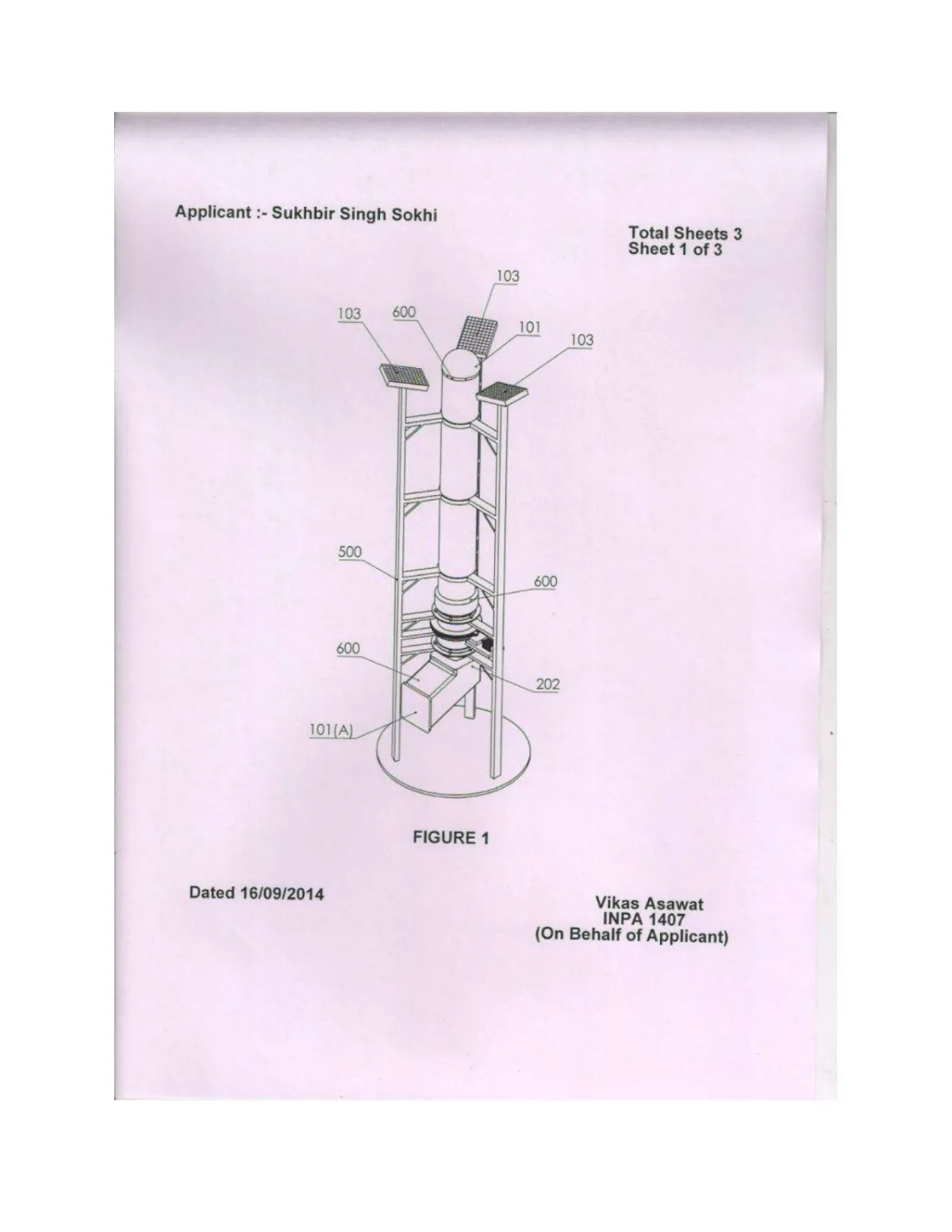
The invention introduces a specialized, active optical and mechanical hardware infrastructure engineered to capture raw, full-spectrum ambient daylight above structural shadow lines and actively deliver it into dark indoor zones via an automated tracking array.
The Three-Layer Mechanical Infrastructure:
- Rooftop Capture Dome: A prismatic collection unit placed at maximum exposure height that traps raw daylight at all angles—even during low-angle morning or evening hours—preventing ambient rays from escaping.
- High-Reflectivity Sun Tube: A hollow light channel (scalable from 12 to 48 inches in diameter) constructed internally from ionized aluminum mirror sheets featuring a verified 99.5% reflective index to ensure zero light loss during internal travel.
- Automated Rotational Dispersal Unit (Core USP): The lower section of the sun tube is a bent mechanical pipe driven by a low-draw 0.25 HP motor guided by active light-tracking sensors. It rotates continuously at a precise, non-damaging velocity of 1 Revolution Per Hour (1 RPH).
Delivering the Nobel-Aligned Biological Solution:
By smoothly distributing full-spectrum sunlight across a continuous, 360-degree rotational path, the invention delivers a zero-electricity, life-supporting light field optimized to maximize plant photosynthesis deep inside structural interiors.
- Inside Residential & Commercial Buildings: The system injects direct solar photons deep into insulated interior rooms to maximize the photosynthetic capacity of indoor plants and green walls. This drives indoor vegetation to its absolute biological peak, forcing it to consume locked-in indoor carbon dioxide (CO2) as fuel and release a massive surplus of fresh, natural oxygen. By optimizing oxygen availability at targeted interior zones, the system systematically alters the chemical composition of stagnant air. This directly balances the cellular microenvironment—aligning with the 2019 Nobel Prize framework showing how cell function improves when oxygen levels are optimized—and passively mitigates the daily symptoms of Sick Building Syndrome.
- Inside Commercial Greenhouse & CEA Facilities: The system acts as a climate-positive grow engine. It replaces power-hungry indoor LEDs with free natural sunlight, eliminating terawatts of electrical consumption and leveraging the innate antifungal properties of natural solar light to destroy crop pathogens on contact.
Yes. This invention directly bridges a critical technological and biological gap that has historically rendered traditional daylighting systems and indoor plants useless for microclimate purification.
1. The Human Vision vs. Plant Biology Gap
Traditional daylight tubes and skylights (built by legacy brands like Solatube, Velux, or Sunoptics) are engineered exclusively for human sight, not plant biology. They use rough plastic textures or heavy diffusers to intentionally scatter and break apart the sun's rays to prevent glare for human eyes.
However, scattering completely destroys the intense, concentrated photon stream required to trigger deep plant photosynthesis. Furthermore, these legacy systems are entirely static. Dropping a stationary, unmoving beam of raw sunlight into a room creates severe localized hot spots that rapidly dehydrate and burn plant tissue, making it impossible to grow healthy indoor vegetation directly underneath them.
2. The Critical Indoor Plant Oxygen Deficit
This creates a severe biological bottleneck. Millions of homeowners place shadow-tolerant indoor plants in offices and rooms to improve air quality. However, it is a proven scientific fact that in the absence of high-intensity, direct sunlight, indoor plants cannot produce a surplus of oxygen.
Instead, tucked away in dark indoor shadows, plants switch to cellular respiration—consuming oxygen and releasing carbon dioxide, resulting in a net-zero or negative oxygen output. Traditional air purifiers merely filter particulate matter but are entirely incapable of altering the underlying chemical gas composition of the air.
3. The Rotational Dispersal Solution
This invention solves the prior-art gap by shifting the utility of daylighting from simple human vision to active plant biology. By bypassing scattering diffusers, the system channels raw, focused, full-spectrum sunlight deep indoors.
To eliminate the plant-burning problem, the system introduces its core breakthrough: the sensor-guided, 1 RPH automated rotating lower pipe section. Instead of dropping a static, damaging hot spot, the mechanical drive continuously sweeps the focused daylight across a 360-degree path. This delivers an evenly balanced, non-burning solar field to indoor plants, driving their photosynthetic efficiency to its absolute peak.
The plants are forced to rapidly consume locked-in indoor carbon dioxide (CO2) and generate a massive surplus of fresh oxygen, effectively optimizing indoor oxygen levels at selective places where occupants gather. This mechanical injection of oxygen directly counters the cellular hypoxia rules validated by the 2019 Nobel Prize in Physiology or Medicine, ensuring that human cellular metabolism and physiological functions are protected against the stale, oxygen-deprived conditions that feed Sick Building Syndrome.
The unmatched value of this gatekeeper blockade is verified by four global forward citations, where patent examiners have repeatedly used US 10455775B2 as an ironclad prior-art roadblock to reject newer filings by smart AgTech developers (like Opti-Harvest, Inc.).
- Focus-Preserving 360° Rotational Dispersal Array (Core USP): Features an automated, rotatable bent lower section driven by a low-draw 0.25 HP motor guided by active tracking sensors. Unlike legacy architectural daylight tubes that remain static and utilize rough diffusers to scatter light solely for human vision, this mechanism preserves fully focused, intense full-spectrum sunlight, continuously rotating at a precise velocity of 1 Revolution Per Hour (1 RPH). This sweeps a non-burning solar field across a 360-degree path, providing indoor plants with the intense photon stream required for optimal photosynthesis without localized tissue burning.
- Reversing Indoor Gas Toxicity and Optimizing Oxygen Availability: Replaces indoor shadow deficits with an advanced combination of optical architecture and a rotational dispersal method to drive maximum photosynthetic efficiency. The system delivers the raw solar energy required to force indoor plants to consume harmful indoor Carbon Dioxide (CO2) and release a massive surplus of fresh natural oxygen. This optimizes indoor oxygen availability at targeted interior zones, actively addressing the cellular rules validated by the 2019 Nobel Prize in Physiology or Medicine to eliminate the physical and mental symptoms of Sick Building Syndrome at zero energy cost.
- Targeted Pathogen Mitigation for Specialized Indoor Cultivation: Channels the innate anti-fungal properties of raw, focused solar radiation and distributes it dynamically via the rotating bent tube outlet. This introduces a specialized clear-tech hardware solution for Controlled Environment Agriculture (CEA) that eliminates the crushing electricity overheads of artificial grow LEDs while destroying crop-destroying fungal pathogens (such as White Powdery Mildew and Bud Rot) on contact, mitigating catastrophic 20% to 30% commercial harvest failures.
- Weather-Resilient and Autonomous Off-Grid Infrastructure: Incorporates specific structural dependent claims engineered to shield mechanical movement in extreme environments. These features include heavy structural gear/pinion drive configurations, winterized weather-sealed framing to prevent snow or rain pileup on the rooftop dome, and top-mounted auxiliary solar panels that provide a completely independent, off-grid DC power supply directly to the rotational motor assembly.
Industries where the invention can be useful?
• Sustainable Housing & Residential Real Estate (Primary Addressable Segment): o Single-Family Eco-Housing: Installed through residential roofs specifically to protect growing children and vulnerable elderly family members who spend up to 90% of their time indoors breathing oxygen-deprived air. By delivering focused sunlight to indoor foliage, the system drives rapid photosynthesis to destroy indoor Carbon Dioxide (CO2) and generate continuous, fresh oxygen. This optimizes oxygen levels at targeted home zones, directly countering the cellular degradation pathways verified by the 2019 Nobel Prize to eliminate Sick Building Syndrome (SBS) symptoms like headaches, dizziness, and fatigue. Families living in this oxygen-rich environment fall ill far less often, saving thousands annually by cutting out unnecessary doctor visits and pharmaceutical bills. o The Mental Health & Psychological Edge: Bringing authentic full-spectrum daylight and optimized oxygen levels indoors stabilizes family psychology, lowers anxiety, combats the winter blues, improves deep sleep quality, and instantly boosts mental focus and brain alertness for children studying and adults working from home. o B2B Healthy Residential Complex Developments: Direct integration into modern multi-family apartment blocks and high-rise developments to power indoor green walls and communal botanical spaces, accelerating premium green building certifications (like LEED or WELL) to qualify developers for green tax credits, zoning incentives, and institutional ESG funding. o Premium Building-Envelope Materials: Provides construction companies with a weather-sealed, insulated light transmission tube that channels intense sunlight deep into interiors, allowing material manufacturers to command exclusive proprietary pricing structures far exceeding low-margin static skylights. • Educational & Corporate Institutional Facilities: o School and Daycare Infrastructure: Installed within classrooms to lower locked-in Carbon Dioxide (CO2) exhaled by students, clearing out classroom drowsiness, boosting children's natural immunity, and lowering student absenteeism to help general contractors win high-value public municipal construction tenders. o High-Density Corporate Office Complexes: Deployed inside multi-story office buildings, bank branches, and administrative suites to refresh stagnant, insulated air, yielding a documented 3% to 5% increase in workforce productivity and a massive drop in corporate sick-leave payouts. • Agricultural Technology & Smart Farming (AgTech): o Controlled Environment Agriculture (CEA): Automated deployment within commercial indoor grow facilities and vertical farms, capturing a highly predictable recurring revenue stream for equipment distributors by leasing these arrays under an "Infrastructure-as-a-Service" (IaaS) contract to growers. o Commercial Greenhouse Equipment Manufacturing: Direct integration with greenhouse infrastructure suppliers to eliminate crushing electrical utility bills, allowing greenhouse builders to deploy this patent defensively to command exclusive market capture and block competitive manufacturers. • Legal Cannabis Cultivation Industry: o Industrial Cultivation Networks & MSOs: Integration into high-margin indoor cultivation systems across North America to dramatically reduce facility operational lighting footprints, allowing the acquirer to secure high-yield licensing contracts with Multi-State Operators (MSOs) by taking a fixed percentage of their guaranteed 30% reduction in monthly facility grid-electricity expenses. o Agricultural Crop Biosecurity: Uses the natural anti-fungal properties of raw solar radiation to destroy devastating mold, bud rot, and powdery mildew pathogens on contact, preventing catastrophic 20% to 30% crop losses and enabling the buyer to command premium industrial equipment margins based on harvest insurance value. • Commercial Viticulture & High-Value Canopy Orchards: o Vineyard Acreage Yield Optimization: Sub-canopy solar setups allowing vineyard owners to maximize fully irrigated ground space directly beneath dense grapevines, enabling conglomerates to license this technology by taking a percentage-share royalty on the secondary cash crops (like high-value medicinal herbs or greens) grown year-round on previously wasted shadow land. o Specialty Fruit & Nut Orchards: Strategic land reclamation hardware to channel focused solar light beneath tree lines, allowing orchard owners to expand their production yield per acre by 20% to 25% without the massive capital outlays required to purchase new physical real estate. • Commercial Building Daylight Harvesting & Architectural Lighting: o Dynamic Daylighting Components: Upgrading legacy, static tubular skylight manufacturers by introducing automated, focus-preserving rotational light-distribution extensions, instantly weaponizing the patent portfolio to establish a high-fee licensing block that locks rivals out of the automated, rotational botanical lighting market segment. • Climate Technology & Sustainable Infrastructure (Clean-Tech): o Carbon Offset & De-Carbonization Frameworks: Positioning the hardware as a verified energy-efficiency asset that entirely removes megawatt-scale power consumption, allowing the aggregation of hardware deployments to build a massive carbon-credit optimization block and capture a long-term recurring financial yield by selling the accumulated carbon offset credits (valued at USD $20 per ton of saved Carbon Dioxide (CO2) directly onto global compliance trading markets.An estimate of the total addressable market?
Total Addressable Market (TAM) Valuation Estimate: The combined Total Addressable Market (TAM) is estimated at USD $1.523 Billion over a 10-year horizon, focused strictly on specialized hardware equipment, components, and installation layers. To maintain strict corporate credibility with patent buyers and investment funds, this model completely excludes all downstream consumer revenues (such as retail crop sales or raw real estate values) and isolates only the equipment segments where this rotational sunlight delivery system can be directly integrated. • 1. Wellness Real Estate & Healthy Housing Materials: USD $623 Million o The Baseline Data: Targets the global green construction and healthy building components marketplace, valued at over USD $420 Billion according to World Green Building Council statistics. o The Addressable Niche: Focuses on the 70% of insulated homes and high-density apartments in congested cities that are in immediate need of natural daylighting infrastructure to passively lower harmful indoor carbon dioxide concentrations and optimize oxygen availability. • 2. Controlled Environment Agriculture (CEA) / Commercial Cannabis Grow Lights: USD $500 Million o The Baseline Data: The legal indoor cultivation sector is expanding rapidly, with the global legal marijuana market alone projected to reach USD $102.2 Billion by 2030 (boasting a 25.4% CAGR per Grand View Research data). o The Addressable Niche: Lighting and environmental controls represent up to 30% to 40% of total indoor farming operating expenses. This asset addresses the global horticultural grow-light hardware segment by replacing high-intensity, short-lifespan LEDs with zero-electricity natural sunlight. • 3. Commercial Viticulture & High-Value Canopy Optimization Tools: USD $400 Million o The Baseline Data: The specialized smart-farming automation and precision agricultural equipment sector is valued at USD $12.8 Billion according to Fortune Business Insights data. o The Addressable Niche: Targets the high-value specialty crop land-reclamation hardware market, specifically designed to help orchard and vineyard conglomerates optimize unutilized acreage currently trapped under dark canopy shadows. Serviceable Obtainable Market (SOM) Revenue Projections: Applying a highly conservative 5.0% adoption rate over 10 years (the institutional gold standard for newly introduced clear-tech hardware) establishes a hyper-realistic Serviceable Obtainable Market (SOM) revenue engine of USD $76.15 Million for the acquiring entity, broken down as follows: • USD $31.15 Million: Premium B2B hardware integrations with healthy real estate developers. • USD $25.00 Million: Equipment deployments across automated indoor facility builders. • USD $20.00 Million: Yield-optimization infrastructure sales to vineyard and orchard conglomerates.Potential Customers/End Users. Who might benefit?
This focus-preserved rotational daylighting infrastructure serves a massive, cross-border multi-industry customer base split cleanly across two high-value transaction models: 1. The B2B Infrastructure Integration Segment (Highest Volume Targets) • Commercial Residential Real Estate Developers & Builders: Large-scale home building conglomerates looking to bundle this technology as a premium "Healthy Home Package" that gives freedom from Sick Building Syndrome (SBS). This allows them to charge a 5% to 7% price premium per housing unit to health-conscious buyers, unlocking massive high-margin revenue expansions across master-planned residential pipelines. • Corporate & Commercial Office Enterprise Campuses: Fortune 500 companies looking to install the system in multi-story offices to passively optimize indoor oxygen, reverse employee fatigue, and boost workforce cognitive output by 3% to 5%, dramatically lowering corporate sick-leave payouts. • Educational Facilities General Contractors: Contractors bidding on public municipal construction tenders for schools and daycare centers who can guarantee lower student absenteeism by cleaning up indoor Carbon Dioxide (CO2) and boosting children's natural immunity via optimized indoor air chemistry. • Commercial Greenhouse Equipment Manufacturers: Infrastructure builders looking to deploy this patent defensively to command exclusive market capture, entirely blocking competitive manufacturers from offering automated rotational daylighting guides. 2. The B2C Direct Commercial End-User Segment (Highest Margin Yields) • Private Households & Families: Homeowners looking to protect developing children during critical growing ages and elderly family members during vulnerable health phases. Families who live in this oxygen-rich, naturally lit environment are far less likely to fall ill, creating massive recurring financial savings by drastically lowering out-of-pocket medical expenses, doctor visits, and pharmaceutical bills. • Commercial Indoor Cannabis Growers & Multi-State Operators (MSOs): Cultivators looking to enter high-yield licensing contracts that guarantee a 30% reduction in monthly facility grid-electricity expenses and completely protect crops against devastating 20% to 30% harvest losses from fungal pathogens (like White Powdery Mildew and Bud Rot). • Commercial Orchard & Vineyard Conglomerates: Agricultural operators looking to expand their production yield per acre by 20% to 25% without buying new physical real estate, allowing them to grow high-value year-round secondary cash crops on previously wasted, shadowed land.Documents
-
1792517456480_519.pdf
Actions
Added all portfolio
| Country | Current Status | Patent Application Number | Patent Number | Applicant / Current Assignee Name | Title | Google Patent Link |
| India | Patent Granted | US15/102,069 | US10455775B2 | Sukhbir Singh Sokhi | System for growing plant under shade | Google patent link |
You may also like the following patent