



















LIQUID LEVEL MONITORING AND UNAUTHORIZED LIQUID REMOVAL DETECTION SYSTEM FOR A LIQUID STORAGE TANK

Basic Principle of the Technology -
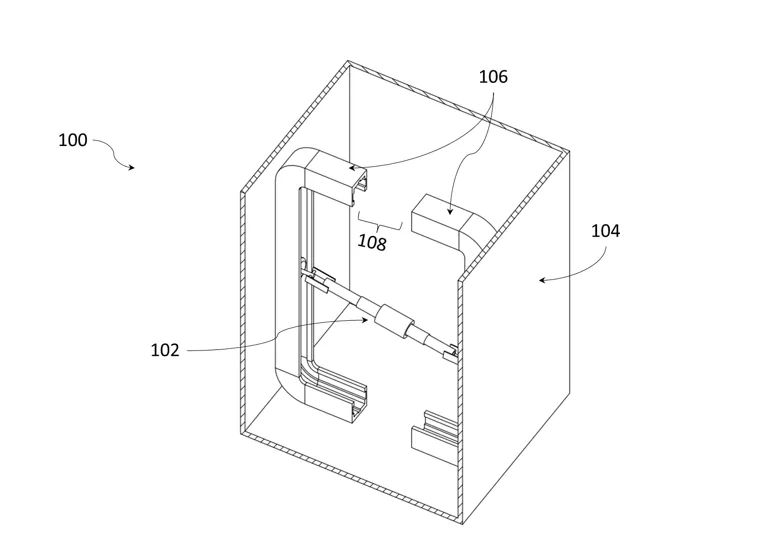
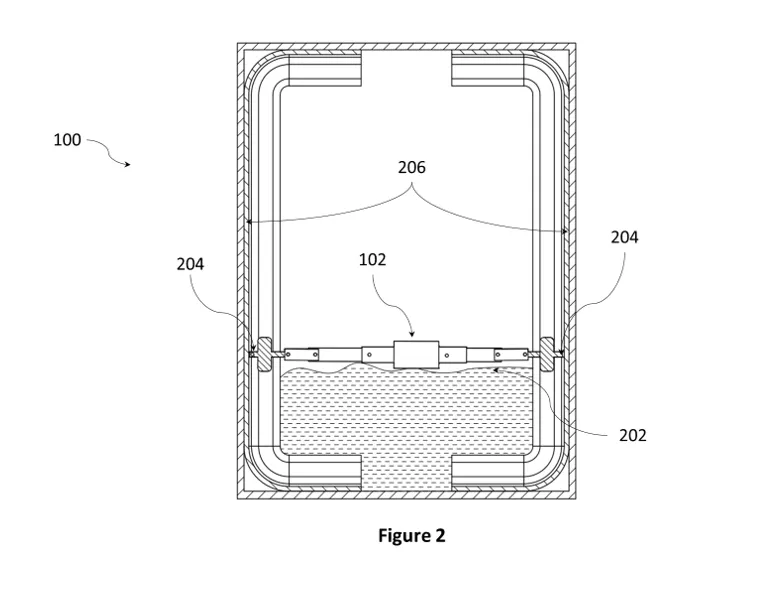
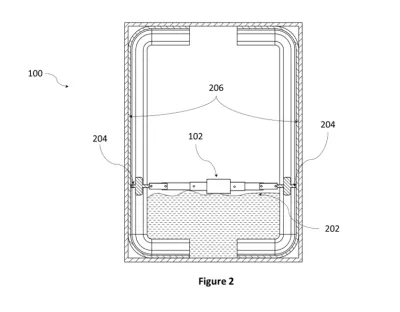
The system employs a floating telescopic shaft that rests on the liquid surface inside the storage tank and extends across its width. Position sensors mounted at both ends of the shaft continuously measure the liquid level at two spatially separated points, and the average of these two readings is computed to determine the true liquid level — eliminating errors caused by
sloshing or tank inclination. The system further integrates GPS-based mileage tracking to compute expected fuel consumption and compares it against actual liquid level reduction. Any significant deviation beyond a predefined threshold triggers an alert for unauthorized liquid removal. The system operates reliably both during vehicle motion and when the vehicle is stationary.
Key Advantages -
• Accurate measurement under motion, inclination, and sloshing conditions
• Intelligent theft detection with minimal false alarms
• Works during both vehicle motion and stationary conditions
• Real-time alerts via SMS, call, email, and WhatsApp
• Explosion-proof design for hazardous fuel environments
• Scalable across different vehicle types and tank sizes
Commercial fleet operators in India face severe operational and financial losses due to rampant fuel theft and siphoning, which consumes up to 8% of total fuel usage. Fuel constitutes roughly 50% of overall operational expenditures for long-haul transport, making undetected leakage a major source of revenue drain. Existing manual logs and basic tracking mechanisms fail to deliver accurate, real-time detection, leading to unaccounted financial losses estimated at over ₹20,000 Crore annually. Furthermore, current telematics lack integrated, tamper-proof hardware and automated analytics tailored to regional fleet operations, leaving fleet owners vulnerable to systematic fuel pilferage without actionable, real-time evidentiary data.
- Economic and Operational Impact: Liquid storage systems across transport, logistics, agriculture, and energy sectors face major financial losses and operational disruption from unauthorized liquid removal and theft.
- Degraded Performance in Dynamic Conditions: Traditional sensors (float-based, capacitive, ultrasonic, pressure-based) lose accuracy during dynamic states like vehicle motion, rough terrain, and fluid sloshing.
- Errors from Tank Inclination: Stationary tanks parked on slopes or uneven ground cause non-uniform liquid distribution, leading to incorrect volume readings.
- High Rate of False Alarms: Existing systems treat sudden level drops as theft, making them unable to differentiate between actual liquid removal and temporary surface fluctuations from vibration, tilt, or movement.
- Limitations of Single-Point Measurement: Standard single-point float mechanisms measure fuel at only one localized spot, failing to reflect the true, overall liquid surface across larger or irregular tanks.
- Practical & Hardware Unreliability: To avoid continuous false alarms, traditional systems often turn off theft detection while the vehicle is in motion, limiting real-world usability. Additionally, current setups lack a combination of mechanical robustness, affordability, safety compliance for hazardous environments, and adaptability to various tank shapes.
The present disclosure provides a liquid level monitoring and unauthorized liquid removal detection system for a liquid storage tank to overcome the limitations of conventional systems. The solution comprises:
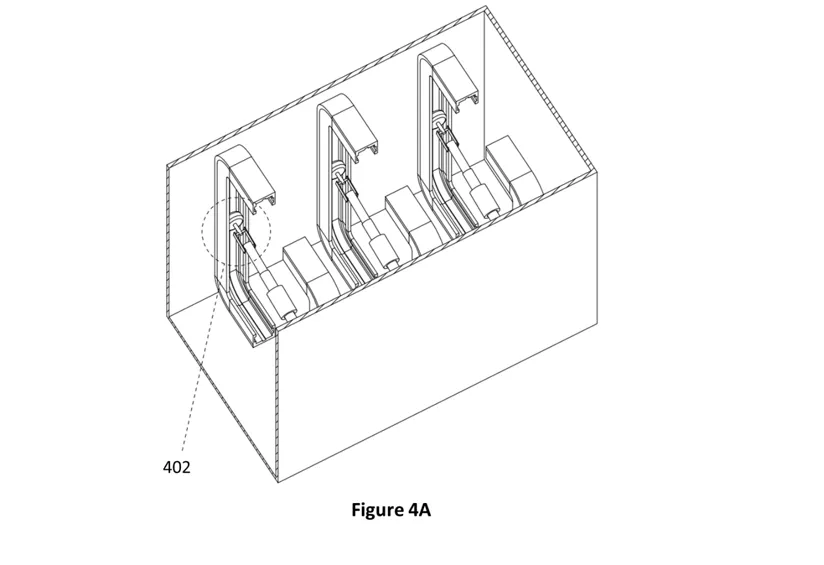
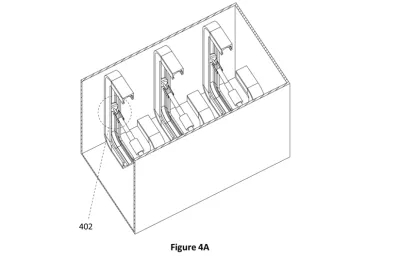
- Floating Telescopic Shaft: Positioned inside the liquid storage tank, at least one floating telescopic shaft floats directly on the liquid surface in either a horizontal or inclined orientation.
- Guideway Structures: A pair of guideway structures mounted inside the tank constrains the movement of the telescopic shaft. These structures feature a circumferential guide channel with an intentional interruption that prevents full rotational movement while allowing vertical displacement as the liquid level changes.
- Dual Position Sensors: At least two position sensors are mounted at opposite ends of the telescopic shaft. Each sensor tracks the position of its respective shaft end relative to a magnetic or encoded reference element on the guideway structures.
- Processing Unit for Theft Detection: A processing unit coupled to the position sensors processes data from both ends of the shaft to accurately determine the true liquid level in the tank—even during dynamic conditions or tilt. The processing unit compares this calculated level against expected liquid usage/consumption and automatically identifies any abnormal reductions indicative of unauthorized liquid removal or theft.
Yes. The present invention addresses several major technical gaps existing in conventional liquid level monitoring and fuel theft detection systems:
- Inability to Measure Liquid Levels on Inclined or Slanted Surfaces: Prior art relies on single-point sensors (floats, capacitive, ultrasonic) that only measure liquid height at a single localized spot. When a vehicle or tank is stationary on an incline, the liquid shifts unevenly, causing single-point systems to give false high/low volume readings or report false fuel drops.
- Vulnerability to Dynamic Motion and Sloshing: Existing systems suffer severe performance degradation during vehicle movement, rough terrain, or fluid sloshing. Because sudden liquid surface movements are falsely flagged as theft, conventional systems frequently generate false alarms or are forced to disable theft detection entirely while the vehicle is in motion.
- Lack of Multi-Point Orientation Tracking: Conventional float setups cannot track the angle or tilt of the liquid surface across the entire tank geometry, failing to distinguish between genuine liquid removal and simple surface displacement.
- Unreliable Theft-Differentiating Analytics: Prior art fails to dynamically compare real-time surface measurement against expected consumption data, rendering them ineffective at detecting slow, systematic fuel siphoning.
The present invention solves these gaps by employing a floating telescopic shaft constrained by anti-rotational guideways, equipped with dual position sensors at opposite ends. This enables continuous multi-point measurement of the liquid surface, providing accurate level detection and reliable theft identification even under inclined, dynamic, or sloshing conditions.
Floating Telescopic Shaft Assembly: Uses a self-adjusting telescopic shaft that floats directly on the liquid surface in both horizontal and inclined orientations, maintaining continuous physical alignment regardless of fuel level.
Anti-Rotational Guideway Channel: Features a pair of internal guideway structures with an intentional circumferential channel interruption that constrains rotation while permitting smooth vertical displacement as the liquid level shifts.
Dual-End Multi-Point Position Sensing: Employs at least two position sensors at opposite ends of the floating shaft to read magnetic or encoded references, enabling accurate 3D surface tilt tracking rather than localized single-point measurements.
Dynamic & Inclination Invariance: Eliminates measurement errors caused by sloshing, vehicle motion, or parking on slanted ground by calculating the true liquid volume from dual-point spatial coordinates.
Intelligent Theft & Discrepancy Analytics: Integrates a processing unit that continuously compares real-time liquid volume against expected consumption profiles to detect subtle, unauthorized siphoning and eliminate false alarms.
Industries where the invention can be useful?
Commercial Transportation, Logistics & Freight, Agriculture & Heavy Farm Machinery, Mining & Construction Equipment, Industrial Storage & Processing, Energy & Oil Distribution, Automotive Telematics.An estimate of the total addressable market?
The global fleet telematics market is valued at over $80 Billion, with the Indian commercial vehicle telematics sector expanding rapidly at a 13.2% CAGR. Fuel theft alone causes an estimated annual loss of ₹20,000+ Crore ($2.4+ Billion) in India, creating a massive addressable market for accurate, real-time fuel anti-pilferage solutions.Potential Customers/End Users. Who might benefit?
Commercial fleet operators, long-haul logistics companies, public transit agencies, mining and construction fleet managers, agricultural equipment operators, commercial vehicle OEMs, and telematics/SaaS service providers.Actions
Added all portfolio
| Country | Current Status | Patent Application Number | Patent Number | Applicant / Current Assignee Name | Title | Google Patent Link |
| India | Under Examination(FER) | 202631061326 A | N/A | 1. Sayandeep Ghosh 2. Sk. Shahid Shahriyor Ahmed | LIQUID LEVEL MONITORING AND UNAUTHORIZED LIQUID REMOVAL DETECTION SYSTEM FOR A LIQUID STORAGE TANK | Google patent link |
You may also like the following patent