


















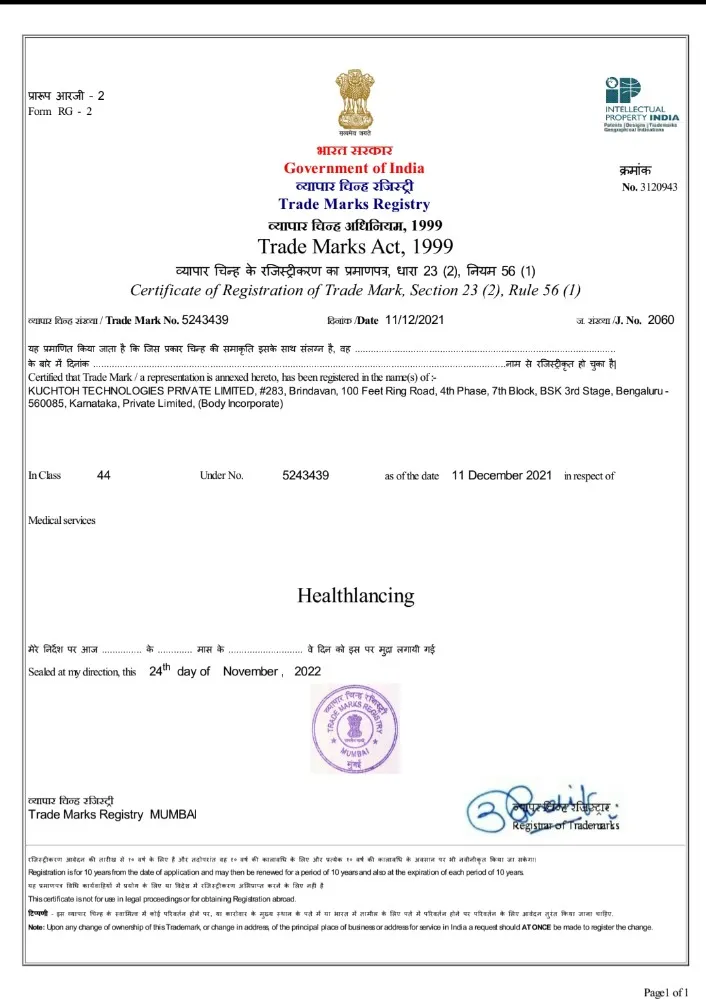
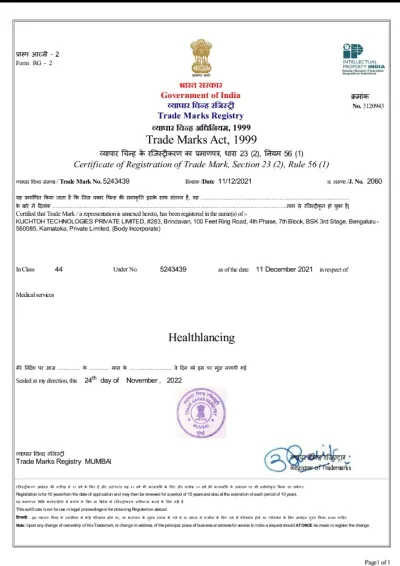
Healthlancer
It is a single online platform that helps hospitals, clinics, doctors, nurses, and equipment owners find and work with each other more efficiently, using smart matching instead of manual phone calls and guesswork.
Today, healthcare resources are scattered and badly coordinated.
Some hospitals lack certain specialists while others nearby have free capacity.
Expensive equipment (like scanners or ventilators) often sits idle in one place while another center desperately needs it.
Staffing and hiring are handled through calls, middlemen, or static systems that do not react to real‑time demand.
Existing apps usually do only one thing (appointments, or hiring, or equipment) instead of seeing the full picture.
Your invention aims to fix this fragmentation and under‑utilization.
Think of it as a “LinkedIn + job portal + equipment marketplace” built specifically for healthcare.
On one centralized digital platform:
Doctors, dentists, nurses, specialists, and medical aspirants can register and share their profiles, skills, availability, and locations.
Hospitals, clinics, and other infrastructure providers can register their facilities, departments, and needs.
Service providers like home‑care agencies or other support services can join the same system.
Owners of medical equipment can list machines that are available to rent, lease, sell, or buy.
All of this information goes into one central system that continuously processes and updates it.
How the “smart matching” works
Your platform uses artificial intelligence and machine learning to give useful recommendations instead of just a basic search.
It looks at things like:
Type of specialist or skill needed.
Availability schedule.
Location and region.
Past engagement and usage history.
Ratings and feedback.
Current and predicted demand in different areas.
From this, it generates two main types of recommendations:
First type: “Who is the best fit here?”
Example: A hospital in Bengaluru needs an on‑call cardiologist for weekend duty; the system suggests suitable doctors who match the skill, timing, and location.
Second type: “Where are the gaps?”
Example: The system detects that a particular district has high demand for dialysis but very few centers or specialists, highlighting a service gap or infrastructure deficiency.
This makes the platform proactive, not just reactive.
Key features explained simply
Registration and profiles
All healthcare entities (people, hospitals, services, equipment owners) can sign up and maintain detailed profiles in one place.
Hiring and workforce management
Hospitals and clinics can find and engage professionals for:
On‑call duties
Temporary or locum shifts
Contractual roles
Short‑term assignments in other regions
This reduces dependence on manual networks and makes staffing more flexible.
Equipment discovery and usage
Medical equipment can be registered, listed, and booked for lease, rent, sale, or purchase.
A hospital that needs a specific machine for a short time can locate available equipment nearby instead of buying a new one immediately.
Central control and coordination
A central processing system manages all data and interactions between these subsystems, ensuring secure and consistent operations at scale.
Improves access to healthcare services in regions that are currently underserved.
Helps hospitals and clinics use doctors, staff, and infrastructure more efficiently.
Reduces waste by making idle capacity and equipment visible and usable.
Supports smarter, data‑driven decisions about where to post staff, open services, or invest in infrastructure.
Brings multiple disconnected functions (staffing, infrastructure, equipment, demand analysis) into one integrated, scalable platform.
Its unique because it treats all key healthcare resources (people, space, equipment, data) as one coordinated “pool” and uses AI to deploy them intelligently across locations, not just match doctors to jobs or patients to appointments. [in.linkedin](https://in.linkedin.com/company/healthlancing)
1. One platform for four resources
Most players do just jobs, or just clinic sharing, or just equipment. Your system explicitly integrates:
- Staffing/freelancing (on‑call, temp, contract, inter‑city).
- Infrastructure sharing (clinic/hospital space by slot, day, specialty).
- Equipment listing and booking (rent/lease/sale/purchase by location).
- Data layer (demand, gaps, historical engagement, ratings) feeding everything. [healthlancer](https://healthlancer.in)
This “all-in-one resource cloud” for healthcare is a core differentiator.
2. Dual AI recommendation engine
You don’t only match A to B; you generate two distinct AI outputs:
- First: “Who fits here now?” – best providers for a specific infrastructure at a defined place/time (e.g., cardiologist for a Saturday PM OPD in RR Nagar). [healthlancer](https://healthlancer.in)
- Second: “Where are the gaps?” – locations where services/infrastructure are missing or under‑supplied (e.g., a taluk with high ortho demand but no ortho clinics).
That second “gap detection” recommendation is rare and very powerful for hospital chains, investors, and even pharma.
3. Flexible, multi‑mode engagements by design
The process doesn’t assume only full‑time jobs. It is built around granular engagement types:
- On‑call, per‑case, per‑session.
- Short‑term locums, inter‑regional rotations.
- Part‑time, work‑from‑home consults, internships/observerships (esp. for women/freshers, as your Healthlancing story highlights). [in.linkedin](https://in.linkedin.com/company/healthlancing)
This flexibility matches real Indian practice patterns.
4. Infrastructure sharing as a first‑class workflow
Instead of treating clinic sharing as a side feature, the invention makes clinic/hospital space a primary entity:
- Registration of spaces with metadata (location, specialty, timing, facilities).
- Matching doctors to those slots based on speciality, demand, and history.
- Monetizing idle OPD rooms/theatres systematically, not via offline brokers. [healthlancer](https://www.healthlancer.in/website/about-us)
That’s different from appointment apps or pure “asset‑light surgery” players who only wrap specific procedures.
5. Equipment handled like people & space
The process treats equipment (USG, scopes, monitors, etc.) as bookable resources with:
- Registration, listing, availability calendars.
- Location‑aware matching (find nearest machine for a case or period).
- Modes: lease, rent, sale, purchase. [6wresearch](https://www.6wresearch.com/industry-report/india-medical-equipment-rental-market)
Bringing this into the same workflow as staffing and infra is unusual and valuable for smaller centers.
6. Designed for B2B and system-level decisions
process isn’t just doctor‑to‑Doctor; it is explicitly B2B and policy-friendly:
- Hospitals, chains, and even pharma can use gap data and specialist distribution to plan expansions, stocking, and rep visits.
- New medical aspirants and assistance providers are onboarded, building a pipeline of talent and services. [origiin](https://origiin.com/patent-licensing-in-pharmaceuticals-industry-a-microscopic-view-of-the-customary-regime/)
That makes it relevant for hospital strategy teams, investors, and pharma market access—not just HR.
Industries where the invention can be useful?
Healthcare Ecosystem: Hospitals/chains, clinics, diagnostics, pharma, insurance, medtech rental, govt health depts, veterinary, telemedicine.An estimate of the total addressable market?
Staffing and Flex work - $2B Infra sharing - $459M Equipment rental - $1B Pharma & insurance - $50kcrPotential Customers/End Users. Who might benefit?
Hospital chains, diagnostic chains, standalone clinics, single speciality, pharma, insurance and equipment rental companies, Drs, dentist, nurses, techniciansActions
Added all portfolio
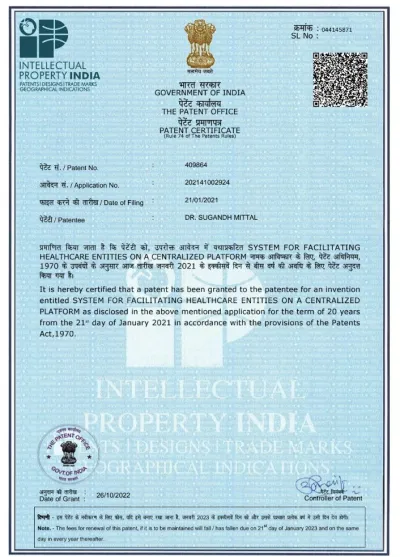
| Country | Current Status | Patent Application Number | Patent Number | Applicant / Current Assignee Name | Title | Google Patent Link |
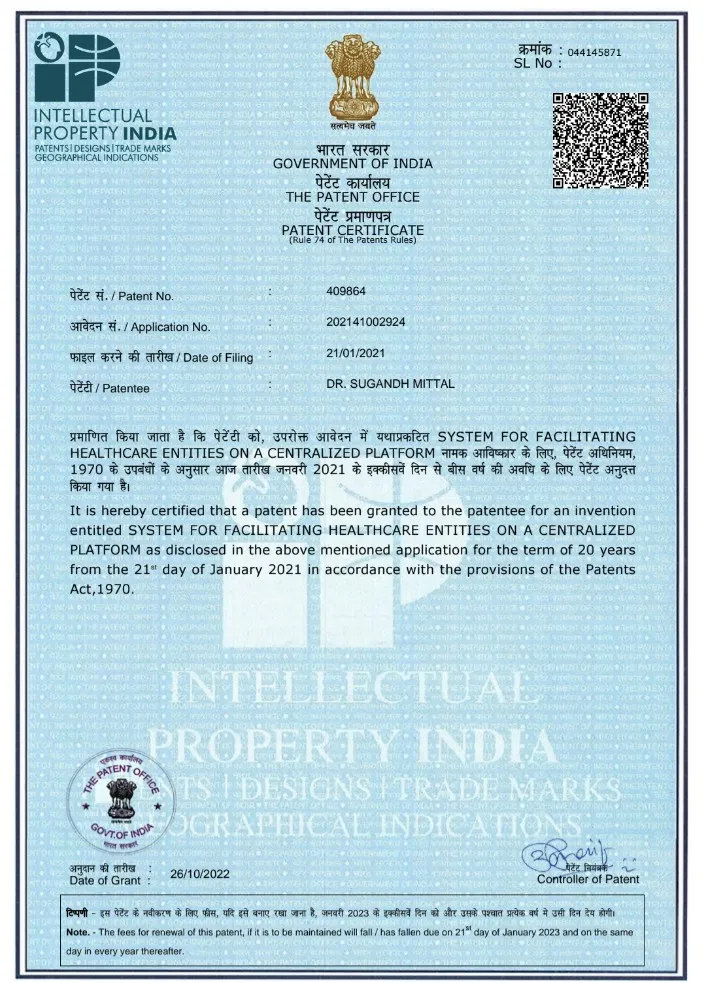
| India | Patented | 202141002924 | 409864 | Dr Sugandh Mittal | System for facilitating healthcare entities on a centralized platform | Google patent link |
You may also like the following patent
Thermal Paper Protection
| Available For: South Africa | Pharmaceuticals and Biotechnology |
patent-approved consumer and occupational safety innovation designed to reduce direct skin contact with thermal paper receipts, which are widely used across retail, service, and administrative...
| Application Number | 2025/11180 |
| Patent Number | pending application |
| Current Status | patent pending |