



















Eco-Friendly Industrial Heating System
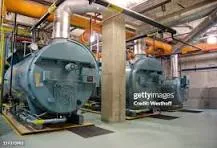
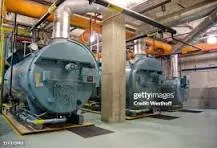
This invention is an environmentally friendly industrial heating system that can provide the same temperature value as other systems that rely on burning natural gas, petroleum materials or flammable organic materials at a lower cost and higher efficiency and without carbon emissions or harmful gases production, it doesn’t consume a large amount of ineffective power and doesn’t cost much financially in terms of electricity consumption bills. It has high efficiency, unlike heating systems that rely on conductive metal coils such as copper or tungsten, for example. They depend on the passage of a large electrical current through a coil made of an electrically conductive material to generate a high magnetic field that is used in heating, such a system consumes a large amount of ineffective power, and its efficiency is low. This system of mine (called an environmentally friendly industrial heating system) can generate high temperatures of up to 1800 degrees Celsius. This system can replace heating systems that rely on electrically conductive coils or those systems that rely on fuel. For example, but not limited to, this system works more efficiently than its counterparts in home appliances such as: heater, cooker, iron, heater, kettles, ovens, microwave, and other heating devices are used in many industrial systems, such as industrial boilers, spark starters, or combustion devices in power plants. This system basically consists of three main parts: (1) An electronic element whose role is to convert electricity into thermal energy with a value of up to 300 degrees Celsius. One unit of the electronic element consumes an amount ranging from 1 to 5 watts. (2) The heating element, which is a chemical substance such as paraffin wax or iron powder, receives the heat coming from the electronic element, so it heats up and the temperature of this substance increases until it reaches 1800 degrees Celsius in the case of iron powder. (3) The cooling element and its function is to cool the electronic element to protect it from damage and melting. It may be water, air, or water mixed with glycol, depending on the required temperature. This system is distinguished by the fact that it can convert electrical energy into thermal energy and convert thermal energy into electrical energy, as shown in my patent which called thermal energy panels for producing electricity, pending with the number: EG/P/2023/943.
[1] High cost, lack of efficiency and many environmental pollutants resulting from the use of these systems such as carbon dioxide emissions. Consuming a large amount of ineffective/reactive power, decrement of power factor and increment of electricity bills. The spread of a large amount of heat in the atmosphere, which negatively affects climate change.
[1] Creating a heating system that relies on an electronic element which is called Thermoelectric Generator (TEG) that generates heat when there is a potential difference on its two terminals, that is, when it is connected to electricity, and it delivers the heat to the heating element, which is iron powder or paraffin wax, which in turn heats up and its temperature increases to 1800 degrees Celsius in the case of Iron powder and it is responsible for heating the thing needed to be heated, such as food utensils, for example, if the system is used in a stove/cooker, or for heating and boiling water if the system is used in boilers, etc. There is also a cooling element that can be water, air, water mixed with glycol, etc. And it is in contact with the other side of the electronic element (TEG) for the purpose of cooling it and protecting it from damage or melting.
Yes, it prevents CO2 emissions and save 66.6% of consumed power in heating.
[1]Low operating costs, high efficiency, and almost no environmental pollutants resulting from the operation of this system. There is no consumption of inactive/reactive power as the electronic element (TEG) operates with direct current, even if the available source is alternating current as the system has an auxiliary circuit to unify/rectify the alternating current and convert it to direct current, which means high efficiency and high power factor and only active power consumption, thus reducing the value of electricity bills as the system works with any current source, whether direct or alternating, which means that it works with electricity coming from renewable energy sources, government electricity sources, or stored in batteries. This system is distinguished by its unique ability to work in both cases and in reverse, meaning that it can convert electricity into thermal energy and convert thermal energy into electricity. This system does not depend at all on natural gas, petroleum materials, or flammable organic materials. Therefore, it is a sustainable system that is safe for individuals and the environment. It keeps pace with international trends in relying on renewable energy sources and the current global situation in the problems of providing natural gas and petroleum materials. It also keeps pace with the global trend to resolve the environmental crises, the problems of climate change and global warming, as it does not produce environmental pollutants and does not dissipate heat in the atmosphere, but on the contrary, it converts heat into electricity. It has the lowest rate of electricity consumption, as the smallest building unit in the system consumes 1 to 5 watts of electricity. This system is characterized by reaching high temperatures of up to, but not limited to, 1800 degrees Celsius, like other systems that rely on electrically conductive coils, or that rely on an arc or electrical sparks, or that rely on burning natural gas, petroleum materials, or organic materials. This system is also characterized by the presence of auxiliary circuits, including those for unifying the current to make the system work with any electricity source, and a circuit that controls the amount of temperature by controlling the amount of current reaching the electronic element. [Claim 1]n environmentally friendly heating system that produces less carbon emissions. [Claim 2]A heating system that does not depend on burning or igniting gas, petroleum or any kind of organic materials which does not result in any harmful vapors or fumes, as well as very few carbon emissions. [Claim 3]The heating system relies on electricity to operate an electronic element that generates heat up to 300 degrees Celsius. This element heats a chemical substance that may be paraffin wax or iron powder, depending on the required temperature, which in turn rises in temperature between 300 and 1800 degrees Celsius. There is also a cooling element which can be water, forced air or water mixed with glycol. [Claim 4]This system can be used to work with photovoltaic panels to increase their efficiency, with boilers, with home appliances to make them operate electrically instead of using natural gas or in electricity generation plants for the purpose of heating/evaporating the water or gas used to move the blades of electricity generation turbines instead of using natural gas or any other flammable organic materials, in general this system works to produce heat to be used with any device or any other system. [Claim 5]This thermal system consumes the least amount of electricity, as one unit of the electronic element consumes from 1 watt to 5 watts. [Claim 6]The thermal system operates using direct or alternating current which increases the reliability of the system. [Claim 7]This system is characterized by the possibility of generating electricity from the remaining heat after work is completed to generate electricity and store it in batteries for reuse again, as well as reducing heat emission. [Claim 8]This system is distinguished from other heating systems that rely on the presence of heating coils (a coil made of an electrically conductive element such as copper or tungsten, for example) in that it does not rely on such metal coils for heating, but rather relies on an electronic element to produce heat, which means that it consumes a smaller amount of electricity, it also does not consume any amount from the ineffective/reactive electrical power, which improves the power factor of the system and the electrical grid, unlike heating systems that rely on coils, which in turn consume a large amount of the ineffective/reactive electrical power, which negatively affects the power factor. [Claim 9]This thermal system consists mainly of a thermal generator which is an electronic element that converts electricity into heat and vice versa, a heating material that receives the heat coming from the electronic element to increase its own temperature and transfers it to a metal surface that in turn heats the thing needed to be heated, such as food utensils in the case of a stove/cooker and a refrigerant to protect the electronic element from damage or melting. This system can generate temperatures up to 1800 degrees Celsius. [Claim 10]This system is characterized by the fact that it can generate thermal energy using electricity and vice versa, as it can generate electricity using thermal energy. [Claim 11]This system is distinguished from any other heating, melting, and combustion systems using an arc or electric sparks in that it does not consume a large amount of electricity like them, it does not pose a danger to humans or the environment due to electrical sparks and it does not produce pollutants and gases that are harmful to the environment like those systems. [Claim 12]This system includes a control system consisting of a temperature sensor, an electronic temperature meter, and a variable resistor to control the amount of current and thus control the temperature generated by the electronic element. [Claim 13] This system relies on heat transfer by convection, conduction and radiation.
Industries where the invention can be useful?
All industries especially boilers industry and heating and home appliancesAn estimate of the total addressable market?
17000000000Potential Customers/End Users. Who might benefit?
Home appliances factories
Documents
-
1765122321404_141.pdf
Actions
Added all portfolio
| Country | Current Status | Patent Application Number | Patent Number | Applicant / Current Assignee Name | Title | Google Patent Link |
| Egypt | Pending | EG/P/2024/466 | EG/P/2024/466 | Mahmoud Ahmed Saad | Eco-Friendly Industrial heating system | Not mentioned |
You may also like the following patent
FLORA‑REVIVA V3.1 — Gerador e Restaurador de Vida Biológica
| Available For: Brazil | Environmental Services |
FLORA‑REVIVA V3.1 é uma solução completa e inédita para recuperar solos degradados e fortalecer plantas. É uma composição que junta nanotecnologia, nutrientes, microrganismos benéficos e...
| Application Number | BR1020260171743 |
| Patent Number | |
| Current Status | pedido depositado em analise |
Method and Device for processing of filter material, product obtained thereof WO2017122182
| Available For: India | Environmental Services |
Our solution brings a new way to recycle used air filters and technological residues from their production.Thanks to an internationally protected patent, we transform the difficult-to-recycle...
| Application Number | 201827030533 |
| Patent Number | 527337 |
| Current Status | Granted |